Real Estate
Insurance-Driven Relocation: How 2026 Homeowners' Insurance Costs Are Reshaping Migration to the Midwest
Sep 18, 202613 min read
By WorldFinance Editorial Team
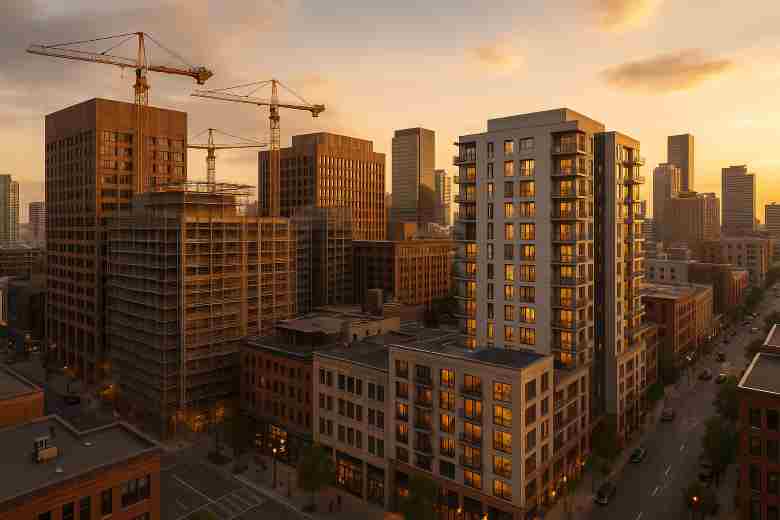
Office-to-apartment conversions hit a record 90,300 units in 2026, up 28% year-over-year, with suburban and secondary markets increasingly catching up to the trend.
Office-to-apartment conversions have become one of the defining real estate trends of 2026. At the start of the year, 90,300 apartments were in some stage of conversion nationwide — up 28% from 70,600 a year earlier, another record for the sector (The Real Deal). Office conversions now account for nearly half — 47% — of all adaptive reuse projects underway across the country, and construction costs typically run $250,000 to $300,000 per unit.
Urban cores still dominate the conversion pipeline. New York leads the country with 16,358 units in conversion, followed by Washington, D.C. (8,479) and Chicago (4,360). But the more interesting shift for 2026 is geographic broadening: Denver, Philadelphia, and St. Louis have each more than doubled their conversion pipelines this year, climbing the national rankings as adaptive reuse activity spreads well beyond the handful of cities that dominated the trend early on (REJournals). Conversion activity is also expanding into suburban and secondary markets, enabled by more supportive local policies than existed even a couple of years ago (Gorove Slade).
The forces driving conversions in downtown cores apply, with some adjustment, to suburban office parks too. Financial pressure from upcoming loan maturities is pushing owners of underused or vacant office buildings toward conversion rather than continuing to carry a money-losing asset. Suburban office parks — often built with lower floor-plate depths and more natural light than downtown towers, which makes them easier and cheaper to convert to residential — are increasingly attractive conversion candidates as the format proves out in city centers. Some suburban markets are going further, reimagining outdated office parks as mixed-use "live-work-play" communities rather than pure residential conversions.
Beyond the supply-side conversion story, suburban rental demand has genuine demographic and financial tailwinds. With mortgage rates running close to 7% through much of 2026 (Bankrate), more households are staying in the rental market rather than buying, supporting demand across both converted and purpose-built suburban rental product. Millennial and Gen Z renters continuing to favor renting over buying longer than prior generations adds a further structural layer of demand that isn't purely a function of today's interest rate environment.
The binding constraint on suburban conversions tends to be regulatory and financial rather than demand-related. Many suburban office parcels are still zoned strictly commercial, requiring a formal land-use change, hearings, and sometimes a lengthy approval process before residential conversion can even begin — a process that can stretch well over a year in some jurisdictions and adds real uncertainty for lenders evaluating a deal. Where municipalities have moved to explicitly support conversions — through eased parking requirements near transit, expedited review processes, or incentives tied to including affordable units — projects have moved faster and at lower cost, which is part of why conversion activity has concentrated disproportionately in cities and, increasingly, suburbs that have adopted these kinds of supportive policies.
The national data supports treating suburban office-to-residential conversion as a genuine, scaling opportunity rather than a one-off niche play — the sector has grown 28% year-over-year and is actively broadening beyond its original handful of hub cities. But the same data points to real variation by market: cities and suburbs with clear, supportive conversion policy are capturing a disproportionate share of the growth, while jurisdictions with slow or unclear approval processes remain a much harder environment to underwrite. Evaluating the local regulatory environment — not just building condition and rent comps — is as important to a conversion deal's success as the physical asset itself.
How many apartments are currently being converted from office space nationally? 90,300 units were in some stage of conversion at the start of 2026, up 28% from 70,600 a year earlier.
Which cities lead in office-to-apartment conversions? New York (16,358 units), Washington, D.C. (8,479), and Chicago (4,360) lead nationally, though Denver, Philadelphia, and St. Louis have each more than doubled their pipelines this year.
How much does an office-to-apartment conversion typically cost per unit? Construction costs generally run $250,000 to $300,000 per unit, though this varies significantly by building condition and local labor costs.
Are suburban office parks good conversion candidates? Often, yes — many suburban office buildings have shallower floor plates and more natural light than downtown towers, which can make residential conversion easier and cheaper.
What's the biggest obstacle to suburban office conversions? Zoning — many suburban office parcels are still classified strictly commercial, requiring a formal land-use change and approval process that can take well over a year in some jurisdictions.
What's driving suburban rental demand right now? Elevated mortgage rates (near 7% through much of 2026) keeping more households renting longer, combined with a generational shift toward renting among Millennial and Gen Z households.