UK & Europe
France's 2026 Budget Crisis: What Political Gridlock Means for European Bond Markets
Sep 18, 202613 min read
By WorldFinance Editorial Team
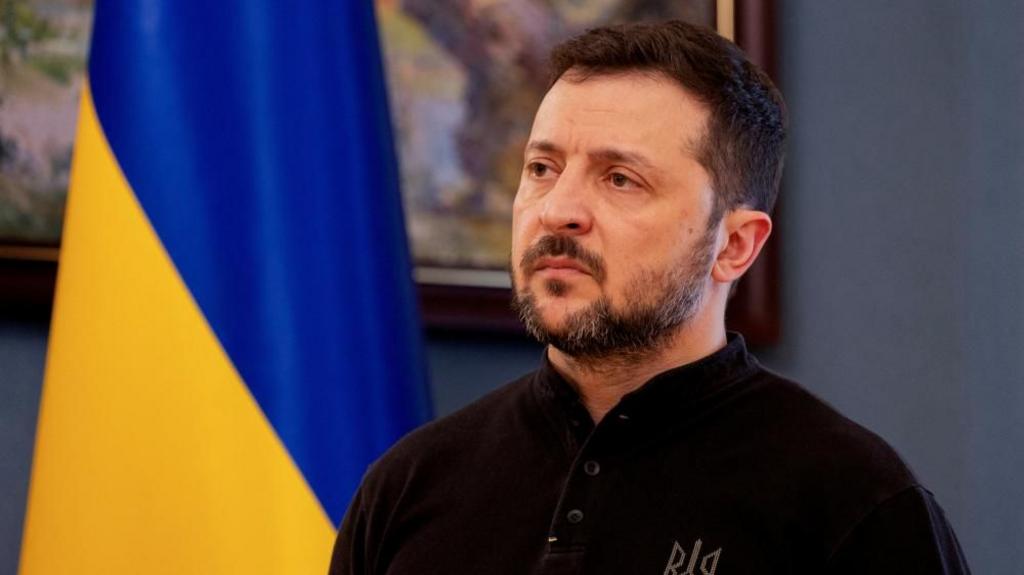
Two asks, one meeting: more Patriot missiles for winter, and an energy-infrastructure ceasefire with Russia. One is a defense-demand story, the other is a European gas-price story, and Trump's own account of what was agreed doesn't match Kyiv's.
Volodymyr Zelensky met Trump on the sidelines of the UN General Assembly this week with two specific asks: a "winter package" of new military equipment, centered on the Patriot air defense missiles Ukraine badly needs before the cold sets in, and support for a ceasefire covering energy infrastructure strikes. One of those is a defense-industrial demand story. The other is a European energy-price story. They're worth pulling apart separately, because they move different parts of the market for different reasons — and because what actually got agreed to is genuinely unclear.
Zelensky's central request was for more Patriot interceptors, the US-made air defense missiles used to shoot down the ballistic missiles and jet-powered drones Russia has increasingly relied on as winter approaches. Patriot interceptors have been in severe short supply globally for some time now, not just for Ukraine — multiple US allies have been competing for limited production capacity, which is part of why this specific ask carries weight beyond just this one meeting.
Raytheon, the RTX business that manufactures the Patriot system, has already been running meaningful Ukraine-related contract flow. A $3.7 billion contract for GEM-T interceptors was signed earlier this year, with a new production facility in Schrobenhausen, Germany, built specifically to support that deal and other related orders. RTX was also named among a major bank's top US stock picks for the current quarter, reflecting broader confidence in the company's near-term order backlog independent of any single announcement.
A fresh winter arms package, if it materializes, would extend that existing demand trajectory rather than create an entirely new one. That's an important distinction for reading defense-sector stock moves around this kind of headline: the structural story — sustained, multi-year demand for air defense systems across US allies, not just Ukraine — was already in place before this specific meeting. This week's ask is another data point inside that ongoing pattern, not a standalone catalyst.
The second, and arguably more market-relevant, piece of this meeting was the discussion around a ceasefire specifically covering energy infrastructure. Zelensky said Ukraine is "ready for energy ceasefire," and confirmed Ukraine supports a full truce covering all energy infrastructure, including oil and diesel refineries — but explicitly conditioned on Russia agreeing to the same terms.
This matters more than it might first appear, because European natural gas prices have been trading with a real risk premium tied to exactly this kind of infrastructure conflict. As of mid-September, European gas was trading around €79 per megawatt-hour, with the region entering winter carrying low storage levels after supply disruptions tied to Gulf tensions curtailed LNG imports from the Persian Gulf earlier in the year. A genuine, holding ceasefire on energy infrastructure strikes specifically would remove one of the more direct, ongoing sources of supply risk feeding into that price, separate from the broader war itself.
Here's where the story gets murkier, and where it's worth being careful rather than taking the more optimistic framing at face value. Trump stated that Ukraine and Russia had already agreed to halt strikes on each other's energy infrastructure. Kyiv's own delegation said it had not been informed of any such agreement.
That's not a minor detail. A confirmed, mutual ceasefire on energy infrastructure is a meaningfully de-risking event for European gas markets. A unilateral statement from one side of the conflict process, described by the other party's own delegation as news to them, is a much weaker signal — closer to a stated aspiration or a characterization of ongoing talks than an actual binding agreement. Markets pricing this news need to distinguish between those two very different situations, and the gap between Trump's account and Kyiv's response is exactly the kind of detail that tends to get smoothed over in headline coverage but matters enormously for how much weight to put on the "ceasefire" framing.
Given that discrepancy, the more useful frame for European gas prices isn't "ceasefire agreed, risk premium should come out" — it's "a possible path toward a ceasefire exists, contingent on confirmation neither side has fully provided yet." That's a real, positive data point. It's not the same as a confirmed, verifiable truce that both sides have publicly and specifically acknowledged.
Historically, this kind of ceasefire-adjacent headline has moved European gas prices meaningfully when it's been confirmed by multiple parties or accompanied by verifiable follow-through — sharp single-day moves have shown up before around comparable news in this conflict and in the adjacent Iran-linked disruptions to Gulf LNG supply. The lesson from those episodes is that gas prices tend to react fastest to the initial headline and then partially reverse if follow-up confirmation doesn't arrive, or extend further if it does. Given the current gap between Trump's characterization and Kyiv's response, this is squarely in the "watch for confirmation" phase rather than the "priced and settled" phase.
Both halves of this story carry extra weight specifically because of where we are in the calendar. Winter is when Ukraine's air defense needs peak, as Russia has repeatedly targeted energy infrastructure and population centers with intensified strikes during the coldest months, and it's also when European gas demand, and therefore price sensitivity to any supply disruption, is at its highest. A functioning energy ceasefire matters more in November through February than it would in June. The same is true in reverse — a failure to reach one, or a ceasefire that doesn't hold, carries more real economic consequence during winter than it would during a lower-demand season.
That timing is almost certainly why both asks landed in the same meeting. A winter arms package addresses Ukraine's immediate defensive needs against an expected escalation in strikes. An energy ceasefire, if it holds, would reduce the target set driving part of that same expected escalation. They're two different tools aimed at overlapping risk, both timed around the same seasonal pressure point.
It's worth stepping back on the Patriot request specifically, because unlike the ceasefire news, this part of the story doesn't hinge on unconfirmed claims — the global shortage of Patriot interceptors relative to demand from Ukraine and other US allies has been a consistent, well-documented theme for some time now. That's a structural demand dynamic rather than a single headline-driven catalyst, and it's the kind of backdrop that tends to support sustained order flow and production capacity investment for the companies involved, independent of how any single diplomatic meeting turns out.
The Schrobenhausen production facility built specifically to support Ukraine-related and broader allied demand is a useful marker here. Companies don't typically stand up new dedicated production capacity for a demand story they expect to be short-lived. That kind of capital commitment is a better indicator of how the defense-industrial base actually views the durability of this demand than any single week's headlines about a specific arms package request.
The honest summary of this week's meeting is that it produced one confirmed, structurally durable story — continued and likely expanding demand for Patriot interceptors and related air defense systems, consistent with a trend that predates this specific meeting — and one unconfirmed, genuinely uncertain story, an energy ceasefire that one side says is agreed and the other says it hasn't heard about.
Treating both with the same level of confidence would be a mistake. The defense-demand story has verifiable, checkable evidence behind it: existing contracts, new production facilities, and a well-documented supply shortage. The ceasefire story currently has a public disagreement about basic facts sitting at its center. Both are worth tracking. Only one of them is currently confirmed enough to treat as a settled input rather than an open question.
There's a broader connection worth making explicit here, because European gas prices this winter aren't being driven by the Ukraine conflict alone. The same stretch that saw gas trading near €79 per megawatt-hour on low storage levels also saw LNG supply from the Persian Gulf curtailed by separate US-Iran tensions — the same tensions behind this week's UN speech threatening Iran and the Strait of Hormuz reopening offer discussed there.
That means European gas prices currently sit at the intersection of two largely separate geopolitical risk stories: a Russia-Ukraine conflict directly threatening European energy infrastructure, and a Gulf-region conflict indirectly threatening the LNG supply Europe has increasingly leaned on to diversify away from Russian gas in the first place. A resolution to either one on its own would help. A resolution to both simultaneously — an energy ceasefire holding in Ukraine at the same time Gulf LNG supply normalizes — would represent a much larger combined easing of the risk premium currently baked into European gas prices than either development would deliver in isolation.
That's also why it's worth tracking both stories together rather than in isolation, even though they involve entirely different governments, militaries, and diplomatic channels. The gas price sitting on a trading screen in Amsterdam doesn't distinguish between supply risk from the Black Sea and supply risk from the Strait of Hormuz — it just prices the combined uncertainty. Right now, both sources of that uncertainty happen to be moving through active, headline-generating diplomacy in the same week.
It's worth being specific about why the market treats unconfirmed ceasefire claims cautiously rather than taking them at face value, because this conflict has produced comparable headline-driven moves before that didn't hold up. Gas prices have fallen sharply in the past on reports of progress toward a broader peace framework or a narrower infrastructure truce, only to partially or fully reverse once follow-up reporting failed to confirm the initial claim, or once fresh strikes demonstrated the truce hadn't actually taken hold on the ground.
That pattern is the specific reason the gap between Trump's and Kyiv's accounts this week matters as much as it does. It's not a new type of discrepancy for this conflict — claims of agreement that turn out to be premature, aspirational, or one-sided have shown up at multiple points over the past several years of fighting. Traders who've been through that cycle before tend to wait for independent, verifiable confirmation — actual strikes stopping, monitored and reported by multiple sources — before treating a ceasefire claim as a durable input into pricing, rather than reacting fully to the initial announcement alone.
How this week's news matters to you depends heavily on what you're actually exposed to. For anyone with direct exposure to European gas prices — through utilities, energy-intensive manufacturers, or the commodity itself — the ceasefire ambiguity is the more urgent thing to track, given how directly it bears on winter supply risk and given how quickly this specific market has moved on both confirmed and unconfirmed versions of similar news before.
For anyone tracking the defense-industrial sector, the more durable story is the structural Patriot demand trend rather than this week's specific request. That trend has been building for a while, is backed by actual contracts and capacity investment rather than a single meeting's headlines, and is far less likely to reverse on a single piece of contradictory reporting the way a ceasefire claim can.
For a broader macro view of European risk generally, the more useful takeaway is that this week added one more data point to an already crowded, fast-moving set of Middle East and Eastern Europe developments all feeding into the same energy-price and geopolitical-risk calculus at once. Keeping track of each thread individually, rather than collapsing them into a single "geopolitical risk is up or down" read, is the more reliable way to actually understand what's moving any specific market.
For the energy ceasefire specifically, the next useful signal isn't another statement from either leader — it's whether strikes on energy infrastructure actually stop, verifiably, on both sides, over the days following this meeting. That's the kind of on-the-ground confirmation that would resolve the current discrepancy between Trump's and Kyiv's accounts far more reliably than any further comments from either side.
For the arms package, watch for actual contract announcements or delivery timelines rather than the initial request itself, since the request is the opening move in what's typically a longer process involving congressional notification, allocation decisions, and production scheduling before any new equipment actually reaches Ukraine.
What did Zelensky specifically ask Trump for? A winter military package centered on Patriot air defense interceptors, which are in short global supply, along with discussion of a ceasefire covering strikes on energy infrastructure.
Did Russia and Ukraine actually agree to an energy ceasefire? That's unclear. Trump said the two sides had agreed to halt strikes on each other's energy infrastructure, but Ukraine's delegation said it had not been informed of any such agreement, and Zelensky's own comments framed Ukraine's participation as conditional on Russia agreeing to the same terms.
Why does an energy ceasefire matter for markets? European natural gas prices carry a risk premium tied partly to ongoing infrastructure strikes. A confirmed, holding ceasefire on energy infrastructure specifically would remove a real, ongoing source of supply-side uncertainty heading into winter, when European gas demand and price sensitivity are both highest.
Which company benefits most from the Patriot missile request? RTX, through its Raytheon business, manufactures the Patriot system. It already holds a $3.7 billion contract for Ukraine-related interceptors and built a dedicated production facility in Germany to support that and other allied demand.
Is the Patriot demand story new? No. Global demand for Patriot interceptors has outpaced supply for some time, driven by Ukraine and other US allies. This week's request extends an existing, well-documented trend rather than introducing a new catalyst.
How should I weigh the ceasefire news against the arms request? Differently. The arms request is backed by verifiable, existing contracts and infrastructure investment. The ceasefire claim currently rests on a direct disagreement between Trump's account and Kyiv's response, making it a story to watch for confirmation rather than one to treat as already resolved.