Gold & Commodities
Lithium's 2026 Whiplash: How Prices Rebounded 86% Even as EV Demand Growth Slows
Sep 18, 202613 min read
By WorldFinance Editorial Team
2026's commodity markets blew past early forecasts: silver more than doubled, gold hit an all-time high before correcting, copper set records, and oil swung repeatedly with the Iran conflict.
Heading into 2026, most bank forecasts called for a modest, single-digit-to-mid-teens gain across commodities. What actually happened blew past those forecasts across nearly every major commodity — gold hit an all-time high, silver more than doubled off its 2025 base, copper set fresh records, and oil swung through repeated double-digit moves tied to the ongoing US-Iran conflict. Here's what's actually been driving commodity markets in 2026, and where each major market stands today.
Silver has been the strongest story of the year. After surging more than 120% in 2025 to break above $65 an ounce by December, silver's momentum carried into 2026, trading around $66-67 an ounce by mid-September (TradingEconomics). The rally is underpinned by a structural supply deficit — 2026 marks the sixth consecutive year silver supply has fallen short of demand — while industrial demand is on track to exceed 720 million ounces for the year, the highest on record. Solar panel manufacturing alone now accounts for roughly 175-185 million ounces of that demand, about a quarter of total industrial use, as global solar capacity approaches 665 gigawatts. Some analysts see silver reaching as high as $120 an ounce before the structural deficit eases (Carbon Credits).
Gold's 2026 has been even more dramatic in relative terms than silver's, just less linear. After gaining roughly 65% in 2025, gold hit an all-time high of $5,589.38 an ounce on January 28, 2026 (Gulf News), before crashing 12% in March — its worst month since 2013 — as the US-Iran oil shock paradoxically pushed real yields and the dollar higher rather than boosting gold's inflation-hedge appeal. Gold has since recovered to trade around $4,384 an ounce as of September 18, still roughly 25% below its January peak but up about 19% year-over-year (TradingEconomics). Major banks including Morgan Stanley now forecast gold consolidating between $4,000 and $4,500 for the rest of 2026, with some seeing a path toward $5,000.
Copper has climbed above $12,000 a ton on the London Metal Exchange, up roughly 42% for the year, with an intraday record near $16,600 per ton on the Shanghai Futures Exchange in early September (CNBC). Unlike past copper cycles driven mainly by China or a single commodity story, 2026's rally reflects three overlapping demand sources hitting simultaneously: the clean energy transition, power-grid investment, and a fast-growing new demand source from AI data center infrastructure — all while supply has struggled to keep pace.
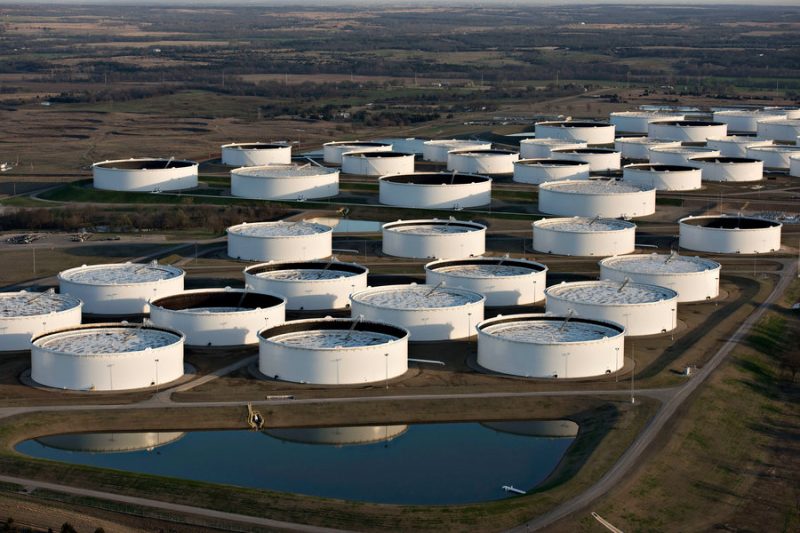
Oil has been the most volatile major commodity this year, swinging with the US-Iran conflict over the Strait of Hormuz rather than following a single trend. Brent crude climbed 28% to around $92.69 in early March as the conflict intensified, then topped $106 a barrel in April amid a full standoff over the strait (Al Jazeera). Prices eased over the summer before surging again in September on reports of renewed Iranian attacks and a drone strike on a Saudi pipeline. Brent closed at $103.87 a barrel on September 18 — still well above where the year began (CNBC). Goldman Sachs has warned Brent could exceed $120 in 2027 if Gulf output stays suppressed and attacks continue.
Natural gas has been the exception to 2026's commodity boom. Despite a major summer heat wave pushing gas-fired power demand up more than 15% week-over-week in early July, the Henry Hub benchmark stayed under $3 per MMBtu all summer, because strong production growth from the Permian and Haynesville regions kept supply comfortably ahead of demand (Natural Gas Intel). Storage is running about 5% above the five-year average heading into winter, and the EIA projects full-year 2026 prices to average around $3.43 per MMBtu (EIA).
Central bank gold and reserve diversification, the AI infrastructure buildout, the ongoing energy transition, and sustained Middle East conflict risk have combined to push most commodities well past what forecasters expected at the start of the year — with natural gas as the main exception thanks to abundant US supply. For investors, the lesson from 2026 is that broad commodity forecasts can undersell how much individual markets diverge: silver, gold, copper, and oil have each been driven by different, mostly unrelated forces, which argues for evaluating each commodity on its own fundamentals rather than treating "commodities" as a single trade.
Did commodities really rise more than the 16% originally forecast for 2026? In several cases, yes, by a wide margin — silver has more than doubled off its 2025 base, gold hit an all-time high before settling up about 19% year-over-year, and copper is up roughly 42%. Natural gas is the exception, staying roughly flat due to abundant supply.
What's driving silver's rally in 2026? A structural supply deficit — the sixth consecutive deficit year — combined with record industrial demand, particularly from solar panel manufacturing, which now accounts for about a quarter of all industrial silver use.
Why did gold crash in March 2026 despite the Iran conflict? The oil shock from the conflict pushed inflation expectations and real yields higher and strengthened the dollar, both of which are typically bearish for gold, outweighing its usual safe-haven appeal during the crisis.
What's driving copper's record prices? Three simultaneous demand sources: the clean energy transition, power-grid investment, and AI data center infrastructure buildout, combined with supply that hasn't kept pace.
Why has natural gas stayed cheap despite record heat-driven demand? Strong production growth from the Permian and Haynesville regions has kept national supply well ahead of demand, insulating the Henry Hub benchmark from the kind of price spikes seen in other commodities this year.
Should investors treat commodities as a single asset class right now? 2026 argues against it — silver, gold, copper, oil, and natural gas have each moved for different, largely unrelated reasons this year, so evaluating each market on its own fundamentals makes more sense than a broad "commodities" bet.