 NEW
NEWUS Markets
The Surge in Direct Listings on US Exchanges in 2026: How Companies Are Bypassing Traditional IPOs and What It Means for Investors
Sep 8, 202610 min read
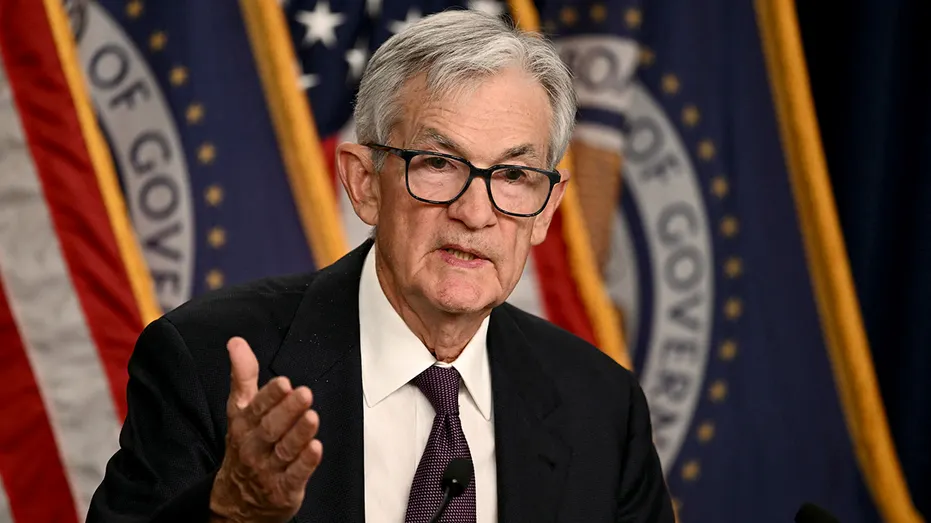
When the Fed rolled out a daily interest rate corridor in 2026, it sent ripples through every corner of the short‑term market. This piece unpacks why the change matters, how it’s shifting investor playbooks, and what risks lie ahead.
The moment the Fed announced a daily interest rate corridor back in early 2026, the buzz on trading floors was palpable. Traders, fund managers, and even the average saver felt a shift in the air – not because the Fed had changed the headline rate, but because it had tweaked the way that rate is delivered to the market every single day. If you’ve ever wondered why your money‑market fund’s yield seemed to wobble a bit more than usual, or why banks were suddenly talking about “corridor pricing,” you’re about to get a front‑row seat to the mechanics, the motives, and the strategic fallout.
For a decade or so, the Fed operated under what many called a "floor" framework. In plain English, the central bank set a target for the federal funds rate and then paid banks a generous interest on excess reserves (IOER). That rate acted like a floor – banks wouldn’t lend to each other for less than what they could earn safely parked at the Fed. It worked, but it also made the overnight market a little too static. Liquidity was abundant, and the spread between the target rate and actual transaction rates narrowed to a whisper.
By 2026, a few things nudged the Fed toward a daily corridor:
The corridor itself is simple in design: the Fed sets a lower bound (the discount rate) and an upper bound (the rate paid on reserves). The target sits roughly in the middle, and the Fed intervenes daily to keep the effective federal funds rate within that band. Think of it as a traffic light that turns green for a narrow window each day, then re‑evaluates at the next market close.
At the start of each business day, the Fed publishes two numbers:
The target rate sits roughly halfway between those two, but the Fed does not publicly announce the exact midpoint. Instead, it lets the market discover the effective rate through daily open‑market operations. If the effective federal funds rate drifts toward the lower bound, the Fed injects a modest amount of liquidity. If it nudges toward the upper bound, the Fed drains a little. The net effect is a daily band that typically spans 25‑50 basis points.
The corridor is not a static line on a chart; it moves with the Fed’s policy stance. In June 2026, after a hawkish FOMC meeting, the upper bound was set at 5.45% while the lower bound sat at 5.15%, creating a 30‑bp corridor centered around a 5.30% target. That same day, the effective fed funds rate settled at 5.31% – right in the sweet spot.
The first few weeks after the corridor’s debut were a study in micro‑adjustments. Treasury yields, which had been inching higher on expectations of further hikes, briefly stalled. The Fed Funds futures market, which trades on the expectation of the effective rate, showed a modest compression of volatility – traders were now pricing in a narrower range of possible outcomes.
A quick look at the dot plot released after the June meeting revealed a broader spread of future rate paths. That spread, however, did not translate into wild swings in the overnight market because the corridor acted like a speed bump. The money‑market fund yields – the ones you see on your checking account – crept up by a few basis points, reflecting the higher upper bound, but they also became a tad more predictable.
In practice, the corridor gave primary dealers a clearer playbook for reverse repurchase agreements (RRPs). When the Fed needed to pull liquidity, it simply raised the discount rate a notch, and dealers responded by offering RRPs at rates just below the new upper bound. The whole dance became more transparent, and that transparency fed into tighter bid‑ask spreads across short‑term instruments.
If you manage a money‑market fund, your primary goal is to keep the 7‑day yield as high as possible while preserving liquidity and credit quality. The daily corridor changes three core levers:
In short, the corridor nudges money‑market managers away from a pure “rate‑chasing” mindset and toward a more holistic view that blends duration, credit, and liquidity.
Treasury bills (T‑bills) have always been a staple of money‑market portfolios, but the corridor makes them even more attractive. The daily band ensures that the effective fed funds rate will rarely stray far from the target, which in turn keeps the T‑bill discount rates tightly aligned with policy. By loading up on 4‑week and 8‑week T‑bills, funds can lock in yields that mirror the corridor’s upper bound without taking on excessive credit risk.
Reverse repos used to be a safety‑net, a place to park cash at a rate just a hair below the IOER. With the corridor, the Fed’s daily adjustments mean the RRP rate can shift more often. Savvy managers are now monitoring the Fed’s daily statements for hints about upcoming RRP rate moves, and they adjust their participation levels accordingly. The goal is to stay just above the lower bound while avoiding the cost of holding cash that earns less than the corridor’s midpoint.
When the corridor tightens the spread between the discount rate and the IOER, the relative attractiveness of high‑quality commercial paper can improve. The key is to focus on issuers with AA‑ or AAA‑rated credit and short maturities (30‑60 days). The corridor’s predictability reduces the risk of sudden rate spikes that could otherwise erode the paper’s yield.
Even though the corridor aims to keep the effective rate within a narrow band, futures markets still offer a way to hedge against unexpected policy shifts. By taking a modest position in Fed funds futures, a manager can lock in a rate slightly above the corridor’s upper bound, providing a cushion if the Fed decides to widen the band later in the year.
No policy tool is a silver bullet, and the daily corridor is no exception. Here are a few risks that investors should keep on their radar:
Staying ahead of these risks means keeping a close eye on FOMC minutes, watching the Fed’s daily release of the upper and lower bounds, and maintaining a diversified portfolio that can absorb short‑term rate turbulence.
The corridor is just one piece of the Fed’s broader toolkit. In 2026, the central bank is still wrestling with sticky inflation and a tight labor market. The June FOMC meeting hinted at a possible rate hike later in the year if price pressures remain elevated. The corridor allows the Fed to fine‑tune the overnight market while keeping the headline target steady, giving policymakers more flexibility to respond to data without the shock of a sudden rate jump.
For the broader economy, that translates to more predictable borrowing costs for businesses and consumers. Mortgage rates, which are heavily influenced by the 10‑year Treasury yield, may see less volatility because the Treasury market often mirrors short‑term expectations. Credit‑card interest rates, which track the prime rate (itself a function of the fed funds rate), also benefit from a steadier backdrop.
If you’re an individual investor with a savings account that earns a money‑market rate, here are three quick actions you can take:
For institutional players, the checklist expands:
Q1: Does the daily corridor replace the federal funds target rate? A: No. The target rate still exists as the Fed’s policy stance, but the corridor provides a daily operating range that helps keep the effective rate aligned with that target.
Q2: How often does the Fed adjust the corridor bounds? A: Adjustments are made on a daily basis, typically after the close of the New York trading session, based on overnight liquidity conditions.
Q3: Will my savings account rate instantly reflect changes in the corridor? A: Not instantly. Banks decide how much of the corridor’s movement to pass through to depositors, so you may see a lag of a few days or weeks.
Q4: Can the corridor lead to higher volatility in the money‑market sector? A: In the short run, the corridor can cause minor swings as markets calibrate, but the overall goal is to reduce volatility by providing a clearer band.
Q5: How does the corridor affect Treasury bill auction pricing? A: The corridor narrows the expected range of short‑term rates, which can lead to tighter bid‑ask spreads at T‑bill auctions and more predictable discount rates.
Q6: Is the corridor a permanent change? A: The Fed treats it as a flexible tool. If economic conditions shift dramatically, the central bank could revert to a floor system or adopt a hybrid approach.
While it’s impossible to predict the exact numbers, a few scenarios are worth watching:
Regardless of the exact path, the key takeaway for anyone with exposure to short‑term rates is simple: monitor the daily corridor as closely as you would a major policy announcement. The Fed has turned a once‑static overnight market into a daily, data‑driven playground, and that changes the rules of the game for everyone from a high‑frequency trader to the person checking their checking‑account interest.
The Federal Reserve’s 2026 introduction of a daily interest rate corridor is more than a technical footnote; it’s a shift that ripples through the entire short‑term financing ecosystem. By establishing a clear, daily band for the effective fed funds rate, the Fed has given markets a sharper tool for price discovery while preserving the flexibility needed to respond to economic surprises.
For money‑market managers, the corridor means a move toward duration‑focused strategies, tighter liquidity planning, and a renewed emphasis on high‑quality short‑term credit. For individual savers, it could mean slightly higher, more predictable yields on cash‑equivalent products. And for the broader economy, the corridor offers a steadier backdrop against which borrowing costs, mortgage rates, and credit‑card interest rates can evolve.
Staying ahead will require a blend of data vigilance, strategic flexibility, and a willingness to adapt as the Fed fine‑tunes its daily band. If you can keep your finger on the corridor’s pulse, you’ll be better positioned to capture the modest but meaningful returns that the short‑term market continues to offer in a world where every basis point counts.
NEW