Gold & Commodities
Lithium's 2026 Whiplash: How Prices Rebounded 86% Even as EV Demand Growth Slows
Sep 18, 202613 min read
By WorldFinance Editorial Team
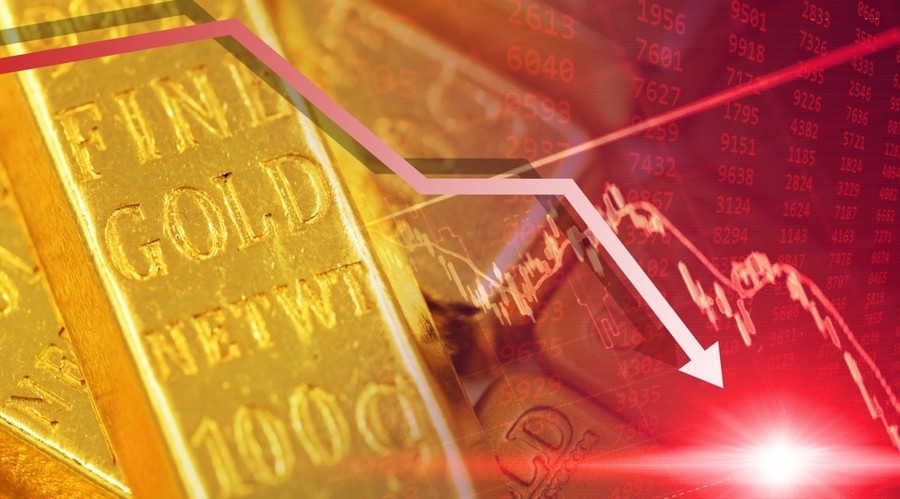
Gold crashed from its January 2026 all-time high of $5,589, but recovered to around $4,384 by September — here's what really caused the drop and whether the bull run is really over.
Gold had a wild start to 2026, reaching an all-time high of $5,589.38 in January before crashing hard in the weeks that followed — its worst month since 2013 (Gulf News). The sudden reversal sparked intense debate about whether gold's multi-year bull run had finally run its course. Now, with several more months of data in hand, there's a clear answer.
Gold surged roughly 65% in 2025, its strongest annual performance since 1979, driven by a weak dollar, sustained central bank buying, and persistent geopolitical uncertainty. That momentum carried into the new year, pushing gold to its all-time high of $5,589.38 an ounce on January 28, 2026. The peak didn't last — gold fell sharply over the following weeks as a very different set of forces than most investors expected took hold.
The conventional explanation — "a strengthening dollar and decreased safe-haven demand" — misses the real mechanism. The crash coincided with the escalating US-Iran conflict over the Strait of Hormuz, which triggered an oil price shock in February and March. That shock should have been bullish for gold as a safe haven. Instead, it backfired: rising oil prices pushed inflation expectations higher, which pushed the market's earliest expected Federal Reserve rate cut back to September, sending real Treasury yields higher and strengthening the dollar — both major headwinds for a non-yielding asset like gold. A sharp equity selloff around the same time added forced liquidation to the mix, as institutional investors facing margin calls sold gold because it was one of the most liquid assets they could exit quickly.
In short: gold crashed roughly 12% in March 2026 not despite the geopolitical crisis, but partly because of how that crisis moved interest-rate expectations and the dollar.
No — and the months since the crash have settled the question. Gold recovered steadily through the summer and was trading around $4,384 an ounce by September 18, 2026, up about 19% from a year earlier, even though it remains roughly 25% below its January peak (TradingEconomics). Major banks have responded by raising their forecasts rather than lowering them: Morgan Stanley now projects gold averaging $4,400 in 2026, up sharply from an earlier estimate of $3,313, and expects prices to consolidate between $4,000 and $4,500 for the rest of the year (Morgan Stanley). Some analysts, including State Street, argue the structural bull cycle could still extend toward $5,000 (State Street).
The structural forces behind gold's multi-year run remain largely intact. Central banks have kept buying at a historic pace — averaging around 1,000 tonnes annually for four straight years, double the pre-2022 norm — regardless of short-term price swings. The Federal Reserve's shift toward rate cuts continues to lower the opportunity cost of holding a non-yielding asset. And fiscal pressure tied to declining tariff-related government revenue has introduced a newer channel supporting gold's appeal as an alternative store of value, as more Treasury debt issuance raises the term premium on bonds even as the Fed eases.
The March crash is a useful reminder that "safe haven" doesn't mean "immune to volatility" — gold can fall sharply even during a geopolitical crisis if that crisis simultaneously pushes real yields and the dollar higher. But the recovery since then shows that a single sharp correction, even a historic one, doesn't necessarily mark the end of a structural trend. Investors who exited gold during the March panic missed a substantial recovery; those who treated it as a correction within an intact structural story were better positioned for what followed.
Did gold's bull run actually end after the January 2026 crash? No. Gold recovered through the summer and was trading around $4,384 an ounce by mid-September 2026, up about 19% year-over-year, and major banks have raised rather than lowered their 2026 forecasts since the crash.
What really caused gold's crash in early 2026? The US-Iran oil shock pushed inflation expectations and real yields higher and strengthened the dollar — both bearish for gold — while a broader equity selloff triggered forced liquidation. It wasn't simply "decreased safe-haven demand."
What's gold's price forecast for the rest of 2026? Most major banks expect gold to consolidate between $4,000 and $4,500, with Morgan Stanley's forecast at $4,400. Some analysts see potential for a continued run toward $5,000.
What's still supporting gold's price? Sustained central bank buying (around 1,000 tonnes annually for four years), continued Federal Reserve rate cuts, and fiscal pressure tied to declining tariff revenue that could raise Treasury term premiums.
Is gold still a good investment after this volatility? Gold has still delivered strong returns in 2026 despite the swings, but the March crash shows it isn't immune to sharp drops even during crises. It remains a useful diversifier, though investors should expect volatility rather than a smooth climb.
How can I invest in gold? Common options include physical gold, gold-backed ETFs, and gold mining stocks, each with different liquidity and risk characteristics. It's worth consulting a financial advisor before making a significant allocation.