Gold & Commodities
Lithium's 2026 Whiplash: How Prices Rebounded 86% Even as EV Demand Growth Slows
Sep 18, 202613 min read
By WorldFinance Editorial Team
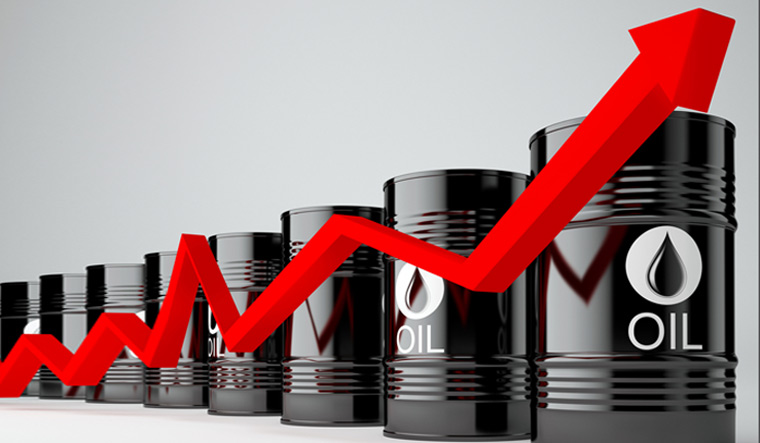
Oil topped $106 a barrel in April 2026 amid the US-Iran conflict and remains elevated near $104 today, after repeated cycles of escalation throughout the year.
Oil prices topped $106 a barrel in April 2026 as the US and Iran escalated their standoff over the Strait of Hormuz — and more than five months later, crude is still trading near those elevated levels, a sign of just how persistent this conflict has been for energy markets (Al Jazeera). Brent crude closed at $103.87 a barrel on September 18, 2026, with WTI at $100.30, after falling slightly as fears eased that a drone attack on Saudi Arabia's East-West pipeline would cause a major new supply disruption (CNBC).
What's notable about 2026 is that this hasn't been one clean crisis with a resolution — it's been a series of escalations and de-escalations that have kept oil elevated for months on end. Brent climbed 28% to around $92.69 in early March as the conflict first intensified. It broke past $106 in April as Washington and Tehran remained deadlocked over the Strait of Hormuz, following tit-for-tat seizures of commercial vessels. Prices eased over the summer — WTI closed around $82.13 in August — before surging again in September on reports that Iran had launched a second undisclosed attack on US Navy ships, and again after the Saudi pipeline attack (CNBC).
Each time the market has priced in some resolution, a new escalation has pushed prices back up — which is the core dynamic energy investors need to understand about this conflict, rather than treating any single price level as the "new normal."
The risk isn't just that prices stay elevated — it's that they could go meaningfully higher. Goldman Sachs has projected Brent could soar above $120 a barrel in 2027 if Gulf crude output remains roughly 4 million barrels per day below pre-war levels, with more intense shipping attacks in the Strait of Hormuz and the Red Sea seen as the most likely driver of that scenario. The disruption pattern so far — persistently low Hormuz traffic, recurring shipping attacks, and renewed mining concerns in the strait — suggests the risk of a further spike remains live rather than resolved.
Energy stocks, particularly producers, have generally benefited from the sustained higher price environment, but the repeated spike-and-retreat pattern has also meant real volatility for anyone trading the sector on short-term momentum. A few practical implications:
Did oil prices actually reach $106 a barrel? Yes — Brent crude topped $106 a barrel in late April 2026 as US-Iran tensions over the Strait of Hormuz escalated, following tit-for-tat seizures of commercial vessels.
What is oil trading at now? As of September 18, 2026, Brent crude was at $103.87 a barrel and WTI at $100.30, after easing slightly as fears about a Saudi pipeline attack's supply impact faded.
Has the Iran conflict caused oil prices to spike just once? No — 2026 has seen repeated cycles of escalation and de-escalation, with prices climbing sharply in March, April, and again in September, interspersed with periods of relative calm.
Could oil prices go even higher? Goldman Sachs has projected Brent could exceed $120 a barrel in 2027 if Gulf crude output stays around 4 million barrels per day below pre-war levels and shipping attacks in the Strait of Hormuz and Red Sea continue or intensify.
How should energy investors approach this market? Diversify across the energy sector rather than betting on a single price level, watch developments in the Strait of Hormuz specifically as the most direct price signal, and treat any period of calm as provisional given the conflict's repeated re-escalations throughout 2026.
What caused the most recent price moves in September 2026? Prices rose on reports of a second undisclosed Iranian attack on US Navy ships and a drone attack on Saudi Arabia's East-West pipeline, then eased slightly as fears about the pipeline's supply impact proved overstated.