Middle East & Gulf
Bahrain's Fintech Sandbox Has Grown Four-Fold — Here's What's Actually Driving It
Sep 9, 202611 min read
By WorldFinance Editorial Team
NEOM just closed a $32 billion financing package for The Line — while Saudi Arabia is simultaneously writing down billions elsewhere and telling its own sovereign wealth fund to make room for private capital. Both things are true, and understanding why tells you where Gulf investment is actually headed.
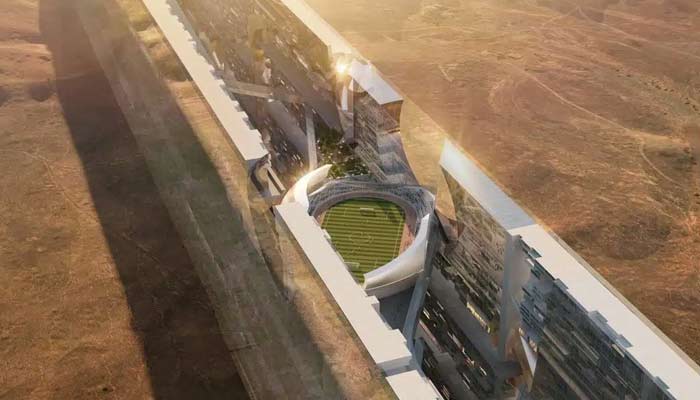
NEOM has spent years generating headlines mostly for its scale and ambition — a planned $500 billion futuristic city in Saudi Arabia's northwest, anchored by The Line, a linear city concept unlike anything built before. In 2026, the headlines shifted to something more financially grounded: a genuine restructuring of how the project gets funded, running alongside real scale-backs elsewhere in Saudi Arabia's broader development agenda. Both things are happening at once, and understanding how they fit together says more about where Gulf capital is actually headed than either headline does on its own.
For years, NEOM served as shorthand for the sheer scale of Saudi Arabia's Vision 2030 ambitions — a symbol as much as an infrastructure project. What's changing in 2026 isn't the ambition itself, which remains intact in its broad strokes, but the financial machinery underneath it, and that shift is arguably the more important story for anyone actually trying to invest in or lend to Gulf development projects going forward.
Despite the broader reset underway, NEOM closed a $32 billion debt-and-equity financing package specifically for the restructured Phase-One build of The Line in 2026. The structure is worth breaking down because it tells you who's actually taking on the risk: $19 billion came through a senior-debt syndicate, $9 billion through subordinated debt, and $4 billion as a direct equity investment commitment from Saudi Arabia's Public Investment Fund itself (The Platinum Capital).
That mix matters. A meaningful majority of the package is debt rather than pure sovereign wealth fund equity, which represents a real shift from how NEOM was financed in its earlier years, when PIF capital did most of the heavy lifting directly. Bringing in senior and subordinated debt syndicates means outside lenders — banks and credit funds — are now underwriting a substantial share of the project's near-term construction risk, which only happens when those lenders believe the restructured, scaled-back version of The Line is a fundamentally more bankable proposition than the original, more sprawling vision.
Here's the part that makes this genuinely more than a routine financing update. While that $32 billion deal was closing, Saudi Arabia was simultaneously working through a broader NEOM reset that included roughly $8 billion in budget write-downs and a considerably scaled-back version of the overall vision (Riyadh 2030). Part of that reset has involved genuinely difficult decisions: NEOM earmarked roughly $16 billion specifically to cancel contracts with its own contractors, a direct financial consequence of previously committed work being reduced or eliminated as the project's scope gets right-sized to something more financially sustainable.
Saudi Arabia's investment minister, Khalid Al Falih, has been explicit about the underlying philosophy shift: the Public Investment Fund should scale back its own direct spending and make room for private capital to take a larger share of funding future development (AGBI). That's precisely what the debt-heavy structure of the $32 billion Line financing represents in practice — it's not a contradiction of the scale-back philosophy, it's an early example of it actually being implemented.
Saudi officials have also reportedly considered more structural changes, including transferring control of some major NEOM assets to other state-backed entities — a sign that even within the giga-project itself, the ownership and financing structure is being actively reworked rather than simply having its budget trimmed.
None of this reset is happening in isolation from Saudi Arabia's broader fiscal position, and that position has genuinely tightened. The 2026 budget projects government revenues of roughly SAR 1.147 trillion against expenditures of about SAR 1.313 trillion, leaving a deficit of approximately SAR 165 billion — around 3.3% of GDP (AGSI). Oil revenue, generated through Aramco dividends, royalties, direct government oil sales, and petroleum-related taxes, still makes up roughly 60% of total government revenue, which means Saudi Arabia's fiscal flexibility remains tightly linked to oil prices that the kingdom itself doesn't fully control.
To cover that gap, Saudi Arabia approved a 2026 annual borrowing plan of roughly SAR 217 billion — about SAR 165 billion earmarked to cover the budget deficit itself, with the remaining roughly SAR 52 billion needed just to repay principal on debt that's maturing during the year. Crucially, the plan is explicit about not relying on a single funding source: Riyadh intends to diversify across domestic and international markets through a mix of conventional bonds, Sukuk (Islamic bonds), bank loans, expanded project and infrastructure financing, and greater use of export-credit agencies to backstop specific deals.
That diversified borrowing strategy is the same underlying logic showing up inside NEOM's own financing structure. When a government is managing a meaningful fiscal deficit while oil revenue remains structurally uncertain, funding a $500 billion vision entirely through direct sovereign wealth fund spending stops being realistic — bringing in private lenders, structured debt, and outside equity isn't optional anymore, it's the only way giga-projects of this scale continue moving forward without straining the broader budget past what's sustainable.
The Public Investment Fund itself is going through its own parallel reset. PIF is finalizing a revised investment strategy focused on six priority areas for the 2026-2030 period, with NEOM remaining one of them but no longer positioned as the recipient of essentially unlimited direct funding it once was. Officials have signaled a clearer focus on fiscal discipline within PIF's own balance sheet, which tracks directly with Al Falih's public comments about the fund needing to scale back and let private capital take a bigger role.
This matters beyond NEOM specifically, because PIF has been the primary financial engine behind nearly every major Vision 2030 giga-project — not just NEOM, but a wide range of tourism, entertainment, sports, and industrial initiatives across the kingdom. If PIF is genuinely recalibrating toward fiscal discipline and reduced direct exposure across its portfolio, NEOM's financing reset is likely a preview of similar restructuring conversations happening, or about to happen, across other giga-projects competing for the same constrained pool of sovereign capital.
For international investors and lenders, the practical signal from NEOM's 2026 reset is that Saudi Arabia's giga-projects are becoming more conventional financing opportunities rather than purely sovereign-funded vanity projects — which is either good news or a yellow flag depending on your perspective. On one hand, a project financeable through a genuine senior-debt syndicate has, by definition, passed real due diligence from banks and credit funds that don't have Saudi Arabia's broader strategic interests to protect them from a bad outcome — that's a meaningfully different credibility signal than pure sovereign wealth fund backing alone.
On the other hand, the fact that this shift is happening now, driven partly by fiscal pressure and partly by philosophy, means investors need to look more carefully at project-specific economics rather than assuming implicit sovereign backing covers every risk. The $16 billion in contractor contract cancellations is a concrete reminder that even NEOM, the flagship of the entire Vision 2030 program, is not immune to having its scope cut when the financing math doesn't work at the originally planned scale. Investors evaluating new opportunities across Saudi giga-projects going forward should expect more rigorous, debt-market-style scrutiny applied to each individual deal, rather than treating "backed by PIF" as a blanket credit enhancement the way it may have functioned in earlier years.
It helps to understand what made the original NEOM financing model unsustainable before assessing whether the new approach actually fixes it. NEOM's initial vision — a $500 billion, multi-decade development including The Line, an industrial hub, a luxury resort island, and a mountain tourism destination, among other components — was originally conceived during a period when oil prices and Saudi fiscal capacity supported the assumption that PIF could essentially fund construction directly and let the broader economic returns materialize over a long horizon. That assumption held reasonably well as long as oil revenue kept pace with committed spending.
The problem is that construction costs for a project this unprecedented rarely track initial projections cleanly, and NEOM has been no exception. The Line's engineering alone — a structure spanning many kilometers with no direct architectural precedent — carries execution risk that's difficult to price accurately at the planning stage, and cost overruns on a project of this scale compound quickly. Combine escalating execution costs with oil revenue that hasn't grown as reliably as the original multi-decade funding plan assumed, and the gap between committed spending and available sovereign capital widens every year the original model continues unchanged. The $16 billion in contractor contract cancellations is the clearest evidence of just how wide that gap had become before this year's reset began.
The Line has understandably dominated NEOM coverage because of its scale and novelty, but it's only one piece of the broader project, and the 2026 reset appears to be treating different components quite differently. Assets and sub-projects considered core to the kingdom's near-term economic diversification goals — the kind of infrastructure that can plausibly generate revenue and demonstrate progress within the current decade — appear to be the ones attracting genuine outside financing interest, like The Line's Phase-One build. Components with longer horizons to any realistic return, or those that depended most heavily on the most ambitious original design assumptions, are more likely candidates for the kind of scope reduction and contract cancellation NEOM has already begun.
That selective approach is arguably the more financially disciplined path compared to either abandoning the entire vision or continuing to fund every original component at its originally planned scale regardless of cost. Whether it proves disciplined enough to keep NEOM on a sustainable financial footing longer-term will depend heavily on execution — specifically, whether the components that do move forward with private financing actually deliver on the construction timelines and cost projections that made lenders comfortable underwriting them in the first place.
Saudi Arabia isn't unique in facing this kind of recalibration. Across the Gulf, governments that built ambitious development agendas during a period of higher, more predictable oil revenue are now managing those same ambitions against a more uncertain energy price environment and, in some cases, genuinely tightening fiscal positions. The specific mechanism — shifting from direct sovereign funding toward blended debt-and-equity structures with meaningful private-sector participation — is likely to show up in other regional giga-projects over the next several years, not just in Saudi Arabia.
For a region that has spent the past decade positioning itself as a magnet for global capital seeking exposure to genuinely transformative infrastructure and urban development projects, that shift toward more conventional financing structures may ultimately prove healthier for the long-term credibility of the entire giga-project category than continuing to fund everything directly off sovereign wealth fund balance sheets that, as this year's budget numbers make clear, aren't limitless.
There's also a credibility argument that cuts the other way, worth acknowledging honestly. A wave of scaled-back timelines and cancelled contracts across the region's giga-projects, even if financially prudent, risks reinforcing a narrative among skeptical international observers that these projects were overpromised from the start. How Gulf governments communicate this shift — framing it as disciplined recalibration rather than quiet retreat — will matter almost as much to future investor sentiment as the underlying financial mechanics themselves. Saudi officials have generally leaned into the disciplined-recalibration framing publicly, positioning the changes as evidence of fiscal maturity rather than failure, and the market's willingness to accept that framing will become clearer as more giga-project financing deals either close successfully or stall over the coming year.
A handful of concrete signals will show whether NEOM's 2026 reset is working as intended rather than simply delaying a harder reckoning. The first is whether The Line's Phase-One construction actually stays on the timeline and budget that made the $32 billion financing package attractive to its lender syndicate — any meaningful slippage there would undermine confidence in applying the same blended financing model to NEOM's remaining components or to other Gulf giga-projects considering a similar restructuring path.
The second signal is how PIF's finalized six-area investment strategy for 2026-2030 actually gets implemented once it's published in full detail, particularly whether the fund follows through on genuinely reducing direct spending across its broader portfolio or whether NEOM ends up as an isolated example of restructuring while other giga-projects continue on the older, more heavily sovereign-funded model. And the third is simply oil price trajectory itself — since roughly 60% of Saudi government revenue still flows from oil-related sources, a sustained move in either direction would either ease or intensify the fiscal pressure currently driving this entire recalibration, and could just as easily accelerate the reset or, if oil revenue recovers strongly, slow the pace of change back toward the earlier, more sovereign-fund-heavy approach.
Q: How is NEOM being financed differently in 2026 compared to earlier years? A: NEOM's $32 billion financing package for The Line's Phase-One build includes $19 billion in senior debt, $9 billion in subordinated debt, and only $4 billion in direct equity from Saudi Arabia's Public Investment Fund — a much more debt-heavy structure than the largely PIF-funded approach used in NEOM's earlier development.
Q: Is NEOM being scaled back or expanded in 2026? A: Both are happening simultaneously in different parts of the project. The Line's Phase-One build is moving forward with new financing, while the broader NEOM vision has seen roughly $8 billion in budget write-downs and around $16 billion earmarked specifically to cancel contracts with contractors as the overall scope gets reduced.
Q: Why is Saudi Arabia scaling back its sovereign wealth fund spending on giga-projects? A: Saudi Arabia's 2026 budget projects a deficit of roughly SAR 165 billion (about 3.3% of GDP), and oil revenue — still around 60% of total government revenue — remains subject to price volatility the kingdom doesn't control. That fiscal backdrop is pushing PIF toward reduced direct spending and a larger role for private capital.
Q: What is Saudi Arabia's 2026 borrowing plan? A: The kingdom approved a roughly SAR 217 billion annual borrowing plan for 2026 — about SAR 165 billion to cover the budget deficit and SAR 52 billion to repay maturing debt principal — diversified across bonds, Sukuk, bank loans, and export-credit agency-backed financing.
Q: What does this mean for foreign investors looking at Saudi giga-projects? A: The shift toward debt-and-equity structures with real private lender participation means projects are facing more conventional financial due diligence rather than being funded purely on implicit sovereign backing. That can be a positive credibility signal for well-structured deals, but it also means investors should expect more project-specific scrutiny rather than assuming blanket PIF support.
Q: Is NEOM's financing reset unique to Saudi Arabia, or part of a broader Gulf trend? A: It's likely a preview of a broader regional pattern. Other Gulf governments that built ambitious development agendas during periods of higher oil revenue are facing similar pressure to shift from direct sovereign funding toward blended financing structures with more private-sector participation.