US Markets
Oil Sinks, Tech Stocks Soar
Sep 23, 202612 min read
By WorldFinance Editorial Team
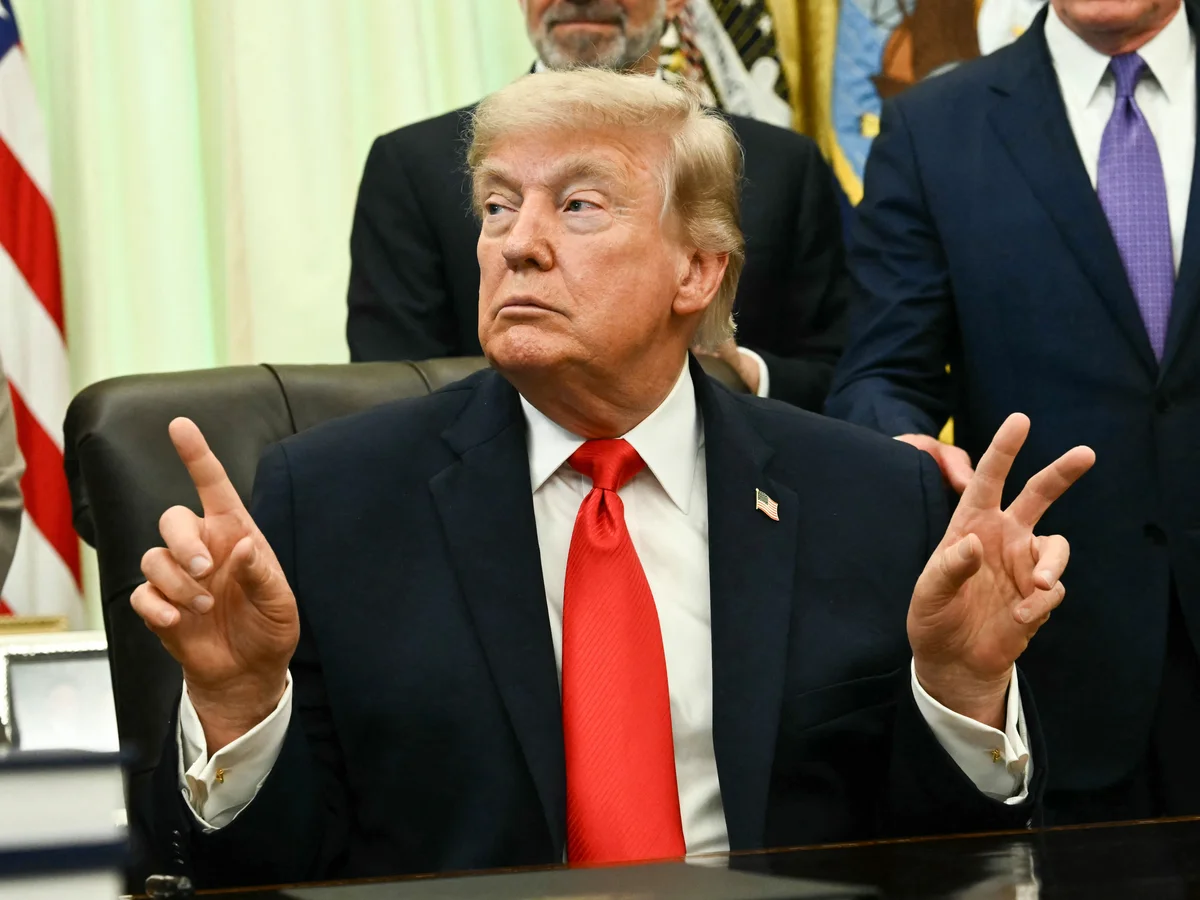
One speech, two very different messages: a threat to "annihilate" Iran, and a hint that a deal is coming after the midterms. Markets reacted to both, and not in the way the headline alone would suggest.
President Trump told the United Nations General Assembly this week that he faces a "big decision" on Iran: reach a deal, or "annihilate" the country. That's the headline, and it's the version that traveled fastest. But it's only half of what he actually said, and markets reacted to the other half at least as much as they reacted to the threat itself.
Trump also told the UN he expects Iran to make a deal "right after the election," adding that Tehran is "waiting to see how I do in the midterm election." Put those two statements next to each other and you get a very different signal than the "annihilate" headline alone suggests — and that's exactly what showed up in how oil, defense stocks, and equities actually traded that day.
This speech didn't land in a vacuum. It came in the same stretch that saw Saudi Arabia restart a key export pipeline that had been damaged amid regional tensions, which had already pushed Brent crude below $100 a barrel for the first time in weeks. That pipeline restart was, on its own, one of the more significant de-escalation signals of the month, and it had already meaningfully cooled the Middle East risk premium baked into oil prices before Trump's UN remarks added a fresh round of headline volatility on top of it.
Seen against that backdrop, the UN speech reads less like a standalone shock and more like one more data point in an unusually active few weeks for Middle East-linked oil risk — a stretch that's included a damaged pipeline, a restart, a Hormuz reopening offer, and now a presidential speech combining a maximalist threat with an explicit deal timeline. Each of those events moved oil independently, and this week's price action shows a market that's had to repeatedly reassess the same underlying risk in a short window, in both directions.
Addressing world leaders directly, Trump spoke to Iran's delegate, seated apart from other members, warning the country would be destroyed if his demands weren't met. He referenced meetings between his son-in-law Jared Kushner and special envoy Steve Witkoff and Iranian officials on the sidelines of the UN gathering, describing them as productive without offering specifics. The broader speech tied Iran into a wider foreign policy message touching Venezuela and Greenland, framed around an increasingly assertive US posture globally.
The "annihilate" language got the coverage. The "deal right after the election" comment, arguably the more market-relevant part of the speech, got comparatively less attention in the immediate headlines — even though it's the part that actually moved specific parts of the market.
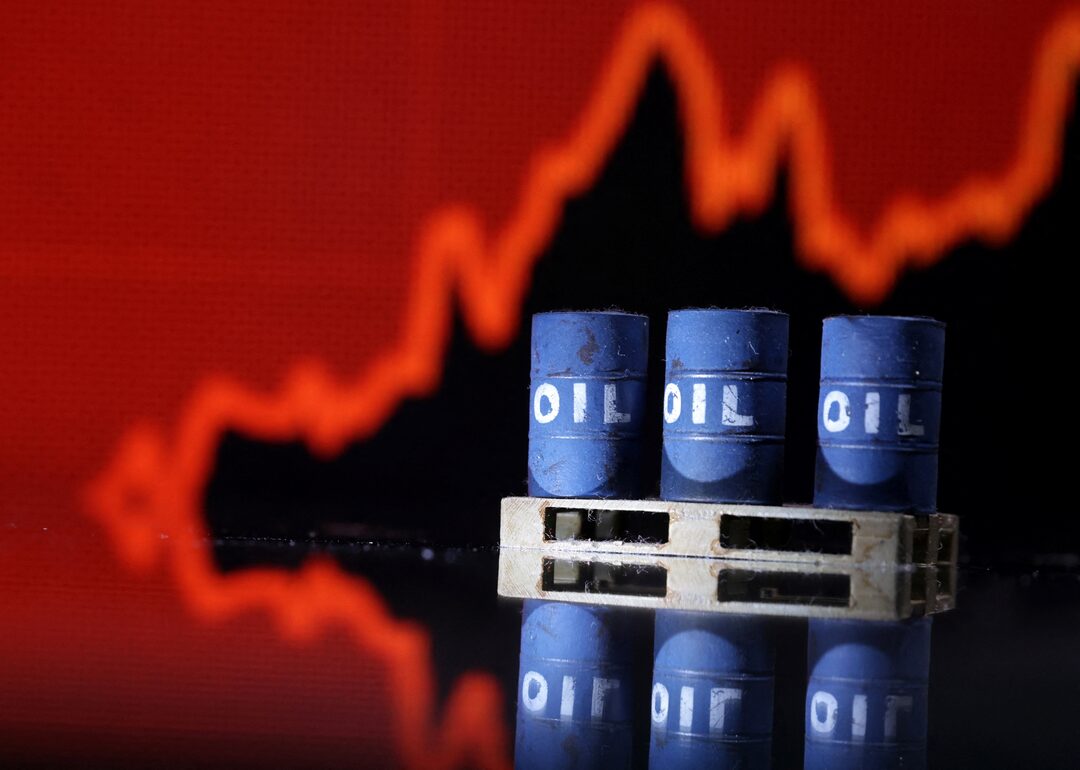
Oil didn't move in one clean direction. It see-sawed through the session as headlines landed one after another, each pushing price a different way. Crude had actually fallen earlier in the day after reports that Iran offered to reopen the Strait of Hormuz within seven days — a significant de-escalation signal on its own, given how much of the Gulf's oil shipping capacity depends on that specific chokepoint staying open. Then, while Trump was actually speaking, both Brent and US crude jumped. By the time he finished, prices for both had risen for the day overall.
That sequence tells you something specific: the market treated the Hormuz reopening offer and the "annihilate" threat as two separate, competing pieces of information, and traded each one on its own merits as it arrived, rather than netting them out in advance. That's a fairly normal pattern for a headline-driven asset like oil during a period of active, fast-moving diplomacy — price reacts to whatever the most recent credible signal is, and gets revised again the moment a new one lands.
Here's the part that runs counter to what you'd expect from an "annihilate" headline: aerospace and defense stocks fell broadly on the day. Not because of the threat — because Trump raised the prospect of a negotiated end to the conflict with Iran in the same speech.
That's a useful reminder about how defense-sector stocks actually trade around this kind of news. They don't move on rhetoric alone. They move on the market's read of the probability and timeline of actual sustained conflict versus a negotiated resolution, because that probability is what ultimately drives defense spending, contract flow, and demand for the hardware these companies produce. A threat of annihilation, without a clear near-term path to acting on it, reads very differently to a defense-sector investor than a president explicitly saying he expects Tehran to cut a deal within a specific window. Markets priced the second signal, not the first.
Away from oil and defense stocks specifically, the reaction across the broader market was fairly contained. The Nasdaq Composite gained 0.45% to close at 27,244.28. The S&P 500 finished essentially flat at 7,764.64. The Dow Jones Industrial Average lost 185.14 points, or 0.36%, to 51,863.69.
None of those are the kind of moves you'd expect from a market genuinely pricing in near-term military escalation with a major regional oil producer. That's consistent with the defense-stock read: whatever risk premium the market might have attached to the "annihilate" language on its own was substantially offset by the "deal after the election" framing landing in the same speech. The net effect on the broadest equity indexes was closer to noise than to a clear risk-off move.
There's a broader lesson in how this traded, useful beyond just this one speech. When a single statement contains both an extreme threat and an explicit, specific timeline for resolution, markets tend to price the timeline more than the threat — provided the timeline is specific enough to actually anchor expectations around. "We'll make a deal right after the election" is a concrete claim with an implied date attached to it, even if that date isn't guaranteed. "Annihilate" is a maximalist statement without a stated trigger or deadline. Between a vague worst-case threat and a specific, near-term de-escalation claim, markets generally lean toward pricing the more specific claim, at least until new information arrives that contradicts it.
This isn't unique to Iran or to this administration. It's a pattern that shows up whenever political rhetoric combines maximalist language with an implicit or explicit off-ramp. The market's job, in effect, is to price the realistic distribution of outcomes, not the most dramatic single sentence in a speech — and on this particular day, that distribution leaned toward "eventual deal" more than "imminent conflict," based on how oil, defense stocks, and the broader indexes actually traded.
It's worth spending more time on the Hormuz reopening offer specifically, because it arguably carried more real economic weight than the UN speech itself. Roughly a fifth of global oil consumption passes through the Strait of Hormuz on any given day, which makes it one of the most closely watched single points of maritime chokepoint risk in the entire energy market. A credible offer to reopen it within seven days, if it holds, removes a meaningful source of supply-side uncertainty that's been baked into oil pricing for weeks.
That's part of why oil fell before Trump even spoke. The Hormuz news was, on its own economic merits, arguably the more consequential data point of the day. The UN speech briefly overrode that move with a burst of headline-driven buying, but the fact that oil had already priced in the Hormuz de-escalation earlier in the session tells you the market was already leaning toward the "resolution" side of this story before the president's remarks added a temporary, rhetoric-driven wrinkle on top.
Combining a maximalist threat with a specific de-escalation timeline in the same statement isn't a new negotiating tactic, and it isn't unique to this administration or this conflict. It's a fairly common structure in high-stakes diplomacy generally: establish a credible worst-case consequence to strengthen your negotiating position, while simultaneously signaling the actual expected outcome is something short of that worst case. Markets have seen versions of this pattern before, across different conflicts and different administrations, and the general lesson holds up reasonably well across those instances — the asset classes most directly exposed to the outcome, in this case oil and defense stocks, tend to price the realistic expected outcome rather than the rhetorical ceiling.
That doesn't mean the threat is meaningless or purely theatrical. A stated willingness to "annihilate" a country, even framed as one option among a decision still being weighed, raises the tail-risk scenario that markets have to account for, even if it isn't the base case being priced. It's part of why oil still jumped during the speech itself, even against a backdrop that had already been trending toward de-escalation. Tail risk got a brief bid. It just didn't override the more specific, more actionable signal sitting right next to it in the same remarks.
For anyone with direct exposure to oil, defense stocks, or the broader Middle East risk premium embedded in markets right now, the useful takeaway isn't "Trump threatened Iran, buy or sell accordingly." It's that the market is currently treating a negotiated resolution as the more probable near-term outcome, based on how the pieces actually traded, even in a week that produced one of the most aggressive rhetorical threats in recent memory.
That reading could change quickly. Diplomatic situations like this one are genuinely fluid, and a single credible report of military action, a failed round of talks, or a reversal on the Hormuz offer could flip the market's read within a single session, the same way this week's headlines flipped oil prices back and forth multiple times in a matter of hours. The takeaway isn't that the risk is gone. It's that, as of this week, the market's actual positioning — not the headline — is leaning toward de-escalation.
It's worth dwelling on the specific mechanism behind Trump's "right after the election" comment, because it's doing more analytical work than it might first appear. Tying an expected Iran deal to the outcome of the US midterms implies the current posture — public toughness, an explicit threat, ongoing but unresolved back-channel talks — is, at least in part, a function of domestic political timing rather than purely a reflection of where negotiations with Iran actually stand on their own merits.
That's a meaningfully different signal for markets than a timeline tied to a specific negotiating milestone, like a technical agreement on inspections or sanctions relief. A politically-anchored timeline suggests the resolution, if it comes, may arrive on a schedule driven by the US election calendar rather than by developments in Tehran. Markets pricing this kind of statement have to weigh both possibilities: that the president's read on Iran's own political calculus is accurate, and that domestic political incentives are shaping the public framing more than the private substance of the talks. Neither can be verified in real time, which is part of why oil kept revising its pricing multiple times within a single session rather than settling immediately on one interpretation.
Three things matter more than any single quote from the speech itself. First, whether the Strait of Hormuz reopening offer actually materializes within the stated seven-day window, since that's a concrete, checkable claim rather than rhetoric. Second, any further readout from the Kushner and Witkoff meetings referenced in the speech, since those are the actual diplomatic channel doing the substantive work behind the scenes. Third, defense-sector earnings commentary and contract announcements over the coming weeks, which will show whether the "deal is likely" read that pushed those stocks lower this week holds up as more concrete information becomes available.
What did Trump actually say about Iran at the UN? He said he faces a decision between reaching a deal with Iran or "annihilating" the country, while also stating he expects Tehran to make a deal "right after the election," since Iran is reportedly waiting to see the outcome of the US midterms.
Why did oil prices see-saw instead of moving in one direction? Oil fell earlier in the day on reports Iran offered to reopen the Strait of Hormuz within seven days, then rose while Trump was speaking due to the more aggressive rhetoric, before settling higher for the day overall as both headlines were absorbed.
Why did defense stocks fall if Trump threatened Iran? Defense stocks trade on the market's assessment of actual conflict probability and timeline, not rhetoric alone. Trump's comment that a deal is likely after the midterms outweighed the "annihilate" threat in how investors priced sector-wide defense demand.
How did the broader stock market react? Relatively little. The Nasdaq gained 0.45%, the S&P 500 was roughly flat, and the Dow fell 0.36%. None of those moves reflect a market pricing in near-term military escalation.
Why does the Strait of Hormuz matter so much? Roughly a fifth of global oil consumption passes through it daily, making any credible threat to its operation, or offer to keep it open, one of the most closely watched single data points in oil markets.
What should investors actually watch going forward? Whether the Hormuz reopening offer holds within its stated timeline, further details from the Kushner-Witkoff diplomatic channel, and how defense-sector earnings and contract flow develop over the coming weeks.