US Markets
Semiconductor Export Controls 2.0: How 2026's Chip Rules Are Reshaping US Tech Earnings
Sep 18, 202613 min read
By WorldFinance Editorial Team
Wall Street closed out a volatile week mixed: the Dow dipped, the S&P 500 and Nasdaq inched higher. Here's the stock-by-stock breakdown of who moved, and the Fed-and-oil story behind it.
Yesterday's session didn't look like much on the surface. The Dow slipped a little, the S&P 500 and Nasdaq nudged higher, and if you only checked the headline numbers you'd assume it was a quiet Friday. It wasn't. Underneath that flat-looking close was a market still digesting the Federal Reserve's first rate hike in three years, a fresh scare in Treasury yields, and a handful of stocks that moved a lot more than the index numbers let on.
Here's what actually happened, and why it matters more than the headline suggests.
The Dow Jones Industrial Average fell 95.40 points, or 0.18%, to end at 51,682.64. The S&P 500 added roughly 0.2%, closing near 7,650.50. The Nasdaq Composite was the strongest of the three, climbing close to 0.4–0.7% depending on the final tally, settling around 26,522.55.
That's a mixed session, not a directionless one. The gap between the Dow's small loss and the Nasdaq's gain tells you where the money was actually going — away from a handful of industrial and consumer-staple heavyweights, and into chips and growth names. Index-level numbers flatten that story out. Stock-level numbers don't, and that's really the whole point of a day like this: the average told you almost nothing, and the dispersion underneath it told you almost everything.
It's worth sitting with that distinction for a second, because it's easy to scroll past a "-0.18%" Dow headline and move on. A quiet index doesn't mean a quiet market. It can just as easily mean two roughly equal and opposite forces cancelling each other out — which is exactly what happened here.
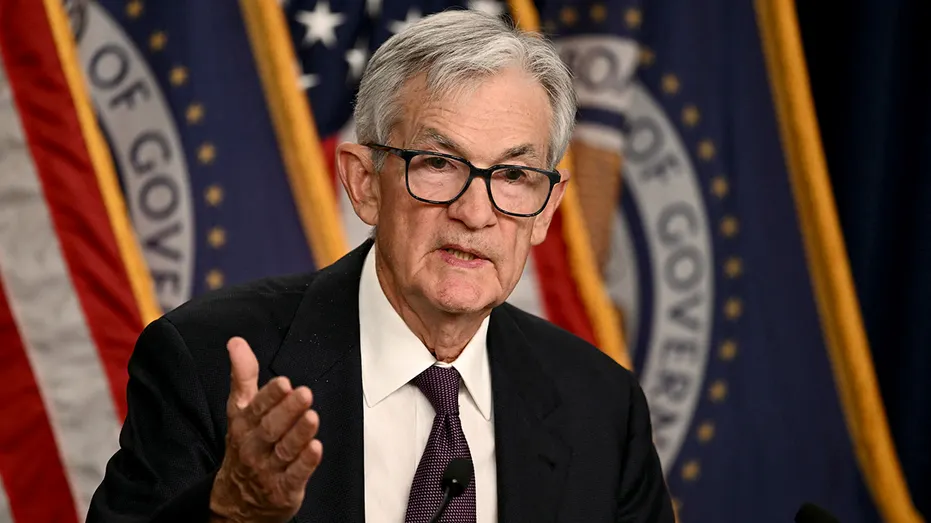
You can't talk about yesterday's move without talking about Wednesday. The Federal Reserve raised its benchmark rate by a quarter point to a range of 3.75%–4%, its first hike in three years. Fed Chair Kevin Warsh didn't soften the message afterward either, saying plainly that "inflation is too high and has been for too long." The Fed's own projections point to at least one more hike before the year is out.
Markets initially sold off on the news, then rallied hard the next session as Treasury yields pulled back from levels not seen since 2007. That rally faded by Friday. Yields rebounded again, and that rebound is the single biggest reason yesterday's session came in mixed instead of another clean advance.
Rate hikes hit different corners of the market differently, and that's exactly what you saw play out over the two sessions that followed the Fed decision. Growth and tech names, which had been punished hardest going into the meeting, had the most room to bounce once yields eased. Slower-growth industrials and consumer names, already trading on thinner margins for surprises, had less cushion — and it showed the moment yields turned back up.
This is the pattern worth internalizing if you're trying to make sense of any Fed-adjacent trading week: the announcement itself is rarely the whole story. It's the two or three sessions after it, as bond markets figure out exactly how many more hikes are coming and price that in gradually, that tend to produce the more interesting stock-level moves.
The other half of the story is oil. Treasury yields climbed back yesterday largely on renewed uncertainty over Middle East oil supply, which pushed both crude and natural gas prices higher. Higher energy costs feed straight back into the inflation numbers the Fed is already worried about, which is exactly why bond markets reacted the way they did — yields up on the expectation that a rate cut is further away, not closer.
That's the mechanism worth understanding here. It's not that traders got a new inflation report yesterday. It's that oil supply risk raised the odds of the Fed's "one more hike" turning into two, and bond markets priced that in immediately. Stocks followed, unevenly.
Energy-linked inflation risk is a particularly stubborn kind of market noise because it doesn't resolve on a predictable schedule the way a scheduled data release does. A CPI print comes out on a known date and the market can position ahead of it. Oil supply risk out of the Middle East can shift on a single headline, at any hour, which is part of why yields whipsawed twice in three sessions this week instead of settling into a clean trend in either direction.
Chipmakers had the best day of any group on the board. Broadcom rose about 3%, and Micron jumped nearly 4%. Nvidia also finished in the green, up roughly 1.3%. None of this happened in isolation — semiconductor names have been the most volatile, most closely-watched corner of the market all year, and a session like this, where risk appetite came back even briefly, tends to show up there first and loudest.
On the Dow specifically, the gainers were a more defensive mix: Amgen led with a gain of about 1.5%, followed by Caterpillar, up roughly 1.2%. That combination — one healthcare name, one industrial, alongside a chip rally elsewhere — is a fairly normal signature of a session where investors aren't making a single directional bet so much as picking through individual stories.
It's tempting to lump "chips were up" into one clean narrative, but even inside that group the size of the moves varied a lot. Micron's near-4% gain and Nvidia's more modest 1.3% aren't really telling the same story — one reflects a smaller, more volatile name catching a bigger relative bid, the other reflects a mega-cap where a similar dollar move produces a smaller percentage swing. Worth remembering before assuming every green number in the same sector means the same thing.
IBM had the worst day on the Dow, down about 3.2%. Walt Disney and Nike weren't far behind, falling roughly 2.7% and 2.3% respectively. Outside the Dow, Meta dropped about 2.4% and Oracle lost around 2%.
What connects IBM, Disney, Nike, Meta, and Oracle isn't a single piece of news — it's valuation sensitivity. These are all stocks that, for different reasons, had run up on optimism heading into the Fed decision. When yields climbed back yesterday, the stocks with the least room for disappointment gave the most ground back. That's a pattern worth remembering the next time you see a "mixed" session get written off as boring: the index average is boring, the stock-level dispersion underneath it usually isn't.
There's also a simpler, less exciting explanation sitting alongside the valuation story: some of this is just mean reversion after a strong run. A stock that's rallied hard into a catalyst often gives some of it back regardless of what the catalyst actually says, purely because short-term traders who bought the rumor sell the news. It's rarely the whole explanation, but it's almost never zero percent of it either.
Zoom out from single names and a clearer picture forms. Technology, and specifically chips, absorbed most of the week's optimism. Financials lagged, staying roughly flat to slightly negative across the week as higher-for-longer rate expectations squeeze the yield curve they depend on. Consumer discretionary names were split down the middle — hurt where they compete on thin margins (Nike), helped where pricing power is stronger.
This is what a genuine "wait and see" market looks like. Nobody's making a full-conviction bet that the Fed is done hiking, and nobody's fully pricing in another hike either. Instead, capital is rotating stock by stock, based on which balance sheets and margins can absorb a higher-for-longer rate environment and which can't.
Financials are a particularly interesting case to watch from here. In theory, higher rates should help bank margins over time. In practice, a rate hike delivered alongside explicit "inflation is still too high" language tends to worry investors more about credit quality and loan demand than it excites them about net interest margin — which is a big part of why the sector didn't participate in this week's bounce the way you might expect on paper.
If this week felt familiar, there's a reason. The last time the Fed was actively raising rates, back in 2022 and 2023, the market went through almost the exact same two-step: a sharp initial reaction to the decision itself, followed by a longer, choppier stretch where stocks traded on incremental yield movements rather than any single headline. Chipmakers were volatile then too, for the same underlying reason — they're long-duration bets on future earnings, and long-duration assets are the most mathematically sensitive to changes in the discount rate a higher Fed funds rate implies.
The difference this time is the three-year gap. A market that hasn't seen a hike in three years has had time to get comfortable with a certain rate environment, price risk accordingly, and in some cases lever up around the assumption that rates were done moving in that direction. That's part of why Wednesday's initial reaction was sharper than a single quarter-point move might otherwise justify — it wasn't just the 25 basis points, it was the shift in direction after a long pause.
None of this means yesterday's session is a repeat of any specific past week. Markets don't work that way, and anyone telling you this exact pattern will play out the same way twice is selling something. But the mechanics — yields driving sector rotation, high-duration growth names swinging harder than defensive ones, an initial overreaction followed by a slower repricing — are familiar enough to be useful context rather than noise.
A day like yesterday reads very differently depending on your time horizon, and it's worth being honest about that instead of pretending there's one universal takeaway.
If you're trading short-term, the stock-level dispersion here is the actual opportunity — or the actual risk, depending on which side of IBM's 3.2% drop you were on. Sessions like this, where the index is quiet but individual names move several percentage points on macro repricing rather than company-specific news, are exactly the kind that reward paying attention to yields and oil headlines in near real time.
If you're investing for years rather than days, a single mixed session driven by bond market mechanics is close to irrelevant on its own. What's more useful is the broader signal: rate expectations are still in flux, at least one more hike is on the table, and that's likely to keep producing exactly this kind of sector rotation — growth up when yields ease, defensives relatively better when they don't — for a while yet. Positioning around that broader pattern matters more than reacting to any single day inside it.
Either way, the mistake to avoid is the same one: reading a flat index number as "nothing happened" and skipping the part of the story that actually explains where the money moved.
Two things are worth watching. First, Treasury yields — if they keep climbing on oil-driven inflation fears, expect more of yesterday's pattern: chips and select growth names holding up better than the broader market, industrials and consumer names under more pressure. Second, any fresh signal from Fed officials on that "at least one more hike" language. Markets have already partially priced it in, but partially isn't fully, and any hint that a second hike is coming sooner than expected would likely reopen the sell-off that hit stocks right after Wednesday's decision.
Oil supply headlines out of the Middle East deserve a spot on that watchlist too, even though they're the hardest of the three to actually predict. A meaningful de-escalation would likely pull yields back down and hand the rally back to the names that got hit yesterday. A further escalation does the opposite, and probably faster than either of the Fed-related catalysts would.
None of this is a reason to panic over one session. It is a reason to pay closer attention to which stocks are moving and why, rather than just the index headline. Yesterday's Dow number told you almost nothing on its own. The move in IBM versus the move in Broadcom told you a lot — and that's usually where the more useful read on a market like this actually lives.
Why did the Dow fall while the S&P 500 and Nasdaq rose? The Dow is more heavily weighted toward industrial and consumer names like IBM, Disney, and Nike, which underperformed yesterday. The S&P and Nasdaq have more exposure to chipmakers and growth stocks, which outperformed on the day.
What caused Treasury yields to rebound? Renewed concern over Middle East oil supply pushed crude and natural gas prices higher, which raises inflation expectations and, in turn, bond yields.
Is the Fed done raising rates for 2026? Based on the Fed's own projections following the September hike, at least one more rate increase is expected before year-end. That expectation is a major reason markets remain sensitive to any inflation-related news, including oil prices.
Which stocks were the biggest movers? IBM (-3.19%), Walt Disney (-2.68%), and Nike (-2.26%) led losses. Amgen (+1.54%), Nvidia (+1.33%), and Caterpillar (+1.20%) led gains on the Dow, while Broadcom (+3%) and Micron (+3.9%) led the broader chip rally.
Why did chip stocks outperform the rest of the market? Semiconductor stocks tend to be among the most rate-sensitive, highest-beta names in the market, so when Treasury yields ease even briefly, they're usually first to catch a bid. That's what happened over the two sessions following the Fed's decision, before yields turned back up on Friday.
Should investors be worried about a mixed close like this? A single mixed session isn't a warning sign on its own. What matters more is the pattern underneath it — which sectors are absorbing rate-hike risk well and which aren't. That's the dispersion investors should be tracking heading into the next Fed-related headline.
What should I actually watch next week? Three things: the direction of the 10-year Treasury yield, any follow-up commentary from Fed officials on the pace of further hikes, and headlines on Middle East oil supply. All three were behind yesterday's move, and none of them are fully resolved.