 NEW
NEWAsian Markets
Japan’s 2026 Digital Yen Pilot: What It Means for Payments, Crypto and Asia’s Financial Future
Sep 8, 202612 min read
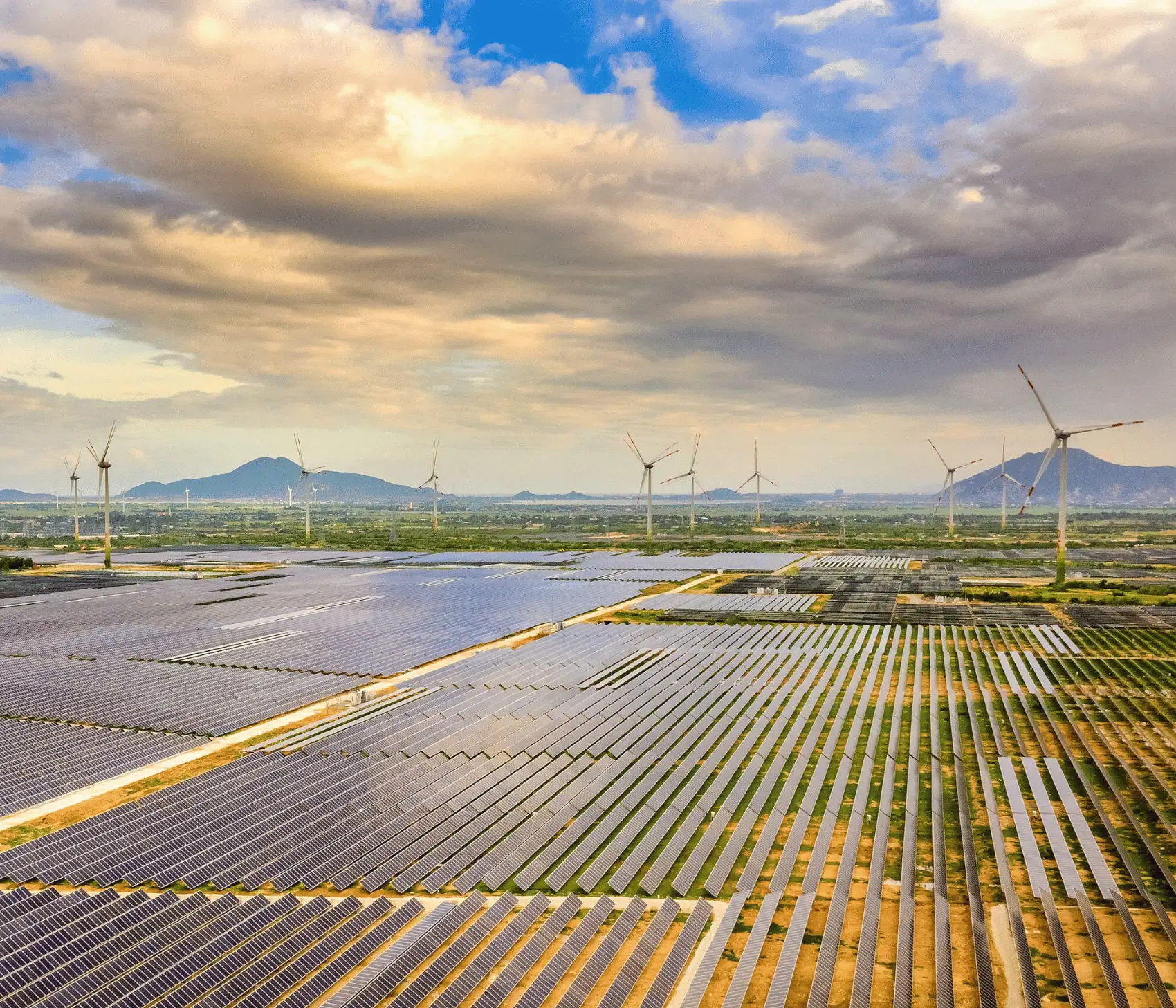
Vietnam’s 2026 policy shift is turning the country into a magnet for renewable‑energy ETFs. Low vehicle taxes, carbon‑border adjustments and a clear net‑zero pathway are coaxing global money into solar, wind and battery projects across the nation.
Vietnam’s renewable‑energy story has always felt a bit like watching a sprinter who suddenly finds a tailwind. In early 2026 the government rolled out a package of incentives that feels less like a policy tweak and more like a full‑throttle invitation to the world’s capital markets. For anyone who’s been tracking the region’s clean‑energy shift, the headline is hard to ignore: Vietnam’s emerging renewable‑energy ETFs are about to get a lot more interesting.
Why are investors suddenly looking at Vietnam with such enthusiasm? The answer lies in a confluence of tax breaks, carbon‑border mechanisms and a bold net‑zero pledge that together reshape the risk‑reward calculus for overseas capital. The low special consumption tax (SCT) rates for electric vehicles—just 1‑3 % in 2026—signal that the government is serious about greening transport. At the same time, the adoption of the EU’s Carbon Border Adjustment Mechanism (CBAM) nudges manufacturers to source low‑carbon electricity, and Vietnam’s abundant wind and solar resources make it a natural fit.
If you skim the headlines from the past decade, you’ll see Vietnam repeatedly mentioned as Southeast Asia’s renewable‑energy front‑runner. Back in 2017 the state introduced a “sun‑burst” incentive that promised developers a premium feed‑in tariff if they could get solar plants online by the end of 2019. That move sparked a wave of utility‑scale solar projects, and the country’s installed solar capacity jumped from a few hundred megawatts to over 20 GW by 2025.
Wind has followed a similar trajectory, especially in the central highlands and along the coast where wind speeds are consistently high. The government’s 2022 Power Development Plan earmarked more than 10 GW of on‑shore wind by 2030, and private investors have already started to line up financing.
But the real game‑changer for ETFs is not just the physical assets; it’s the policy certainty that now backs them.
| Year | Policy | Core Feature | Impact on Capacity |
|---|---|---|---|
| 2014 | Renewable‑Energy Development Strategy (REDS) | Set 13 % renewable share by 2030 | Baseline for later incentives |
| 2017 | Sun‑burst Feed‑in Tariff | Premium rates for solar commissioned by 2019 | Solar capacity grew 15× |
| 2020 | “Power‑to‑Grid” decree | Simplified grid‑connection procedures | Reduced project lead‑time by ~6 months |
| 2022 | Power Development Plan (PDP‑2022) | 10 GW on‑shore wind target | Attracted first wave of foreign wind equity |
| 2024 | Green‑Bond Framework (VDB) | First sovereign‑backed green‑bond series | Lowered cost of capital for developers |
| 2026 | Incentive Package (current) | SCT cuts, corporate‑tax holiday, import‑duty reductions, CBAM‑aligned support | Expected 30‑40 % jump in new project pipelines |
Understanding this trajectory helps investors see that the 2026 package is not an isolated event but the latest rung on a ladder that the government has been climbing for more than a decade.
The special consumption tax (SCT) is a levy that traditionally hits luxury goods and fuel‑intensive vehicles hard. In 2026 Vietnam slashed the SCT for battery‑electric vehicles (BEVs) to a range of 1‑3 %. Hybrid vehicles that run on a mix of gasoline and electricity—or on natural gas—are taxed at 70 % of the standard rate, while pure gasoline cars sit at the full rate. For investors, this means a rapid uptick in BEV adoption, which in turn drives demand for clean electricity.
The CBAM, now being phased in across the EU, imposes a carbon cost on imported goods based on their embedded emissions. Vietnamese manufacturers that export to Europe will feel the pinch unless they can demonstrate low‑carbon production. The government’s response has been to accelerate approvals for renewable‑energy projects and to streamline land‑use permits for solar‑plus‑storage farms.
Beyond the vehicle tax, Vietnam introduced a 10‑year corporate‑income‑tax holiday for projects that achieve at least 30 % of their generation from renewable sources within the first five years. There’s also a reduced import duty on wind‑turbine components and solar‑panel modules, which trims capex for developers.
The state‑owned Vietnam Development Bank (VDB) launched a green‑bond program that offers lower‑interest loans for projects meeting International Finance Corporation (IFC) performance standards. Meanwhile, the Ministry of Finance pledged a matching‑fund scheme where every dollar of foreign direct investment (FDI) in renewable‑energy infrastructure unlocks an equivalent amount of domestic co‑investment.
At its core, an ETF (exchange‑traded fund) bundles a basket of securities—usually stocks of companies operating in a particular sector—into a single tradable vehicle. For renewable‑energy ETFs focused on Vietnam, the underlying holdings typically include:
When the government reduces tax burdens or speeds up permitting, the cash‑flow projections for these companies improve, making the ETF’s net‑asset‑value (NAV) more attractive.
A handful of funds launched in early 2025 have already begun to pivot toward Vietnam. The Emerging Asia Green Power ETF (EAGP), listed on the Singapore Exchange, increased its Vietnam exposure from 5 % to 22 % in the first quarter of 2026 after the SCT cut was announced. Similarly, the Southeast Asia Renewable Index Fund (SARI), domiciled in Hong Kong, now holds a 30 % weighting in Vietnamese wind developers, citing the new tax holiday as a decisive factor.
These funds are not just adding Vietnamese names for diversification; they are betting that the policy environment will keep the cost of capital low and the pipeline of projects robust.
Why it matters: The reduced import duty on PV modules cut the capex by roughly 7 %, while the corporate‑tax holiday lifts the project’s IRR from 7.5 % to 10.2 % under a 20‑year PPA with the state utility. The battery component earns an ancillary revenue stream by providing frequency‑regulation services, a market that the Ministry of Industry is now incentivising through a separate “grid‑flexibility” subsidy.
Why it matters: The import‑duty reduction on turbine towers (from 15 % to 5 %) shaved $45 million off the Phase‑2 budget. The project secured a 15‑year PPA that includes a “green‑premium” clause linked to the EU CBAM, guaranteeing an extra $0.005/kWh for every tonne of CO₂ avoided. The structure has already been cited by SARI’s portfolio manager as a template for future wind deals.
Why it matters: The 1‑3 % SCT on BEVs translates into an estimated 18 % increase in EV registrations by 2028. EVCharge’s revenue model couples per‑kWh charging fees with a “renewable‑energy surcharge” that is passed on to consumers who opt for 100 % green power. The fund holding EVCharge’s equity has seen a 12 % share‑price rally since the SCT announcement, illustrating how vehicle‑tax policy can indirectly boost renewable‑energy equities.
Pension funds in Europe and North America have been tightening their ESG mandates, and many are looking for high‑growth, low‑carbon markets to meet allocation targets. Vietnam’s clear policy roadmap, combined with a relatively low cost of electricity—solar now averages $0.045/kWh in the Mekong Delta—makes it a sweet spot.
More than 150 multinational corporations have signed up for the RE100 pledge, promising 100 % renewable electricity. Companies with factories in Vietnam—think electronics, textiles and automotive parts—are scrambling to secure long‑term power purchase agreements (PPAs) with local renewable developers. Those PPAs often come bundled with ETF‑style financing, where a fund purchases a share of the project’s output and sells the electricity on the open market.
Beyond the traditional equity space, venture capital firms focused on energy‑tech are pouring money into battery‑storage startups that partner with solar farms. The synergy is obvious: solar produces during the day, batteries store excess, and the combined asset can command a premium in the market. ETFs that hold both the solar developer and the storage operator can capture that upside.
Vietnam’s sovereign rating upgrades in 2025 (from B+ to A‑) have lowered the benchmark yield on government bonds, making it easier for state‑owned banks to raise cheap capital for green‑bond issuance. The VDB’s latest $500 million green‑bond tranche, oversubscribed by 3‑to‑1, is earmarked specifically for “grid‑integration projects” that will alleviate the transmission bottlenecks discussed later.
No investment is without risk, and Vietnam’s renewable‑energy space is no exception.
| Risk | Description | Mitigation Strategies |
|---|---|---|
| Regulatory drift | Implementation gaps, land‑acquisition disputes, and varying provincial enforcement can delay projects. | Favor developers with strong local partnerships; monitor provincial decrees; allocate a portion of the portfolio to companies that have already secured land rights. |
| Currency volatility | The Vietnamese dong can swing against the dollar, affecting foreign investors’ returns when profits are repatriated. | Use ETFs that employ currency‑hedging; invest in projects with USD‑denominated PPAs, which naturally hedge a large portion of revenue. |
| Grid constraints | Transmission network lags behind intermittent renewable capacity, leading to curtailment. | Look for holdings in grid‑modernisation firms; consider funds that hold “green‑grid” infrastructure assets. |
| Policy reversals | A change in administration or fiscal priorities could alter tax incentives. | Track parliamentary debates, budget releases, and the Ministry of Planning & Investment’s five‑year outlook; diversify across multiple renewable subsectors. |
| Technology risk | Rapid cost declines in solar panels and batteries could render older assets less competitive. | Prioritise projects that incorporate modular, upgradable technology; favour developers with upgrade clauses in their PPAs. |
| Supply‑chain disruptions | Global shortages of turbine blades or semiconductor chips can inflate capex. | Benefit from reduced import duties; assess whether developers have secured long‑term supply contracts. |
Vietnam’s transmission system, managed by Vietnam Electricity (EVN), was originally built for a coal‑dominant mix. As renewable capacity surged from 2 GW in 2018 to over 25 GW in 2025, the grid’s ability to absorb variable generation became a limiting factor. The 2026 incentive package includes a “grid‑upgrade credit” that allows renewable developers to claim an additional 0.5 % of project cost when they co‑invest in high‑voltage lines or smart‑grid technologies.
Illustrative impact: A 500 MW solar farm in the Central Coast, without grid reinforcement, would face an estimated 12 % curtailment in peak summer months. By co‑financing a 220 kV line extension, curtailment drops to under 3 %, boosting annual energy output by roughly 45 GWh and increasing the project’s net cash flow by $4 million per year. ETFs that hold both the generation asset and the line‑owner can capture the incremental value, a trend already visible in the portfolio composition of the Asia Clean Infrastructure Fund (ACIF).
| Country | Solar cost (US$/kWh) 2025 | Wind cost (US$/kWh) 2025 | SCT on BEVs (2026) | CBAM exposure | Renewable‑energy share target 2030 |
|---|---|---|---|---|---|
| Vietnam | 0.045 (average) | 0.058 | 1‑3 % | High (EU export‑oriented) | 30 % |
| Thailand | 0.052 | 0.064 | 5 % | Medium (EU trade) | 25 % |
| Philippines | 0.060 | 0.072 | 4 % | Low (less EU trade) | 20 % |
| Malaysia | 0.048 | 0.060 | 2 % | Medium | 27 % |
Vietnam’s combination of the lowest SCT for BEVs, the highest CBAM exposure (due to its sizeable electronics export basket), and the most aggressive renewable‑share target makes it the most “ETF‑friendly” market in the region.
If the 2026 incentives achieve their intended effect, we can expect a cascade of developments:
If you’re looking to add a slice of Vietnam’s renewable‑energy boom to your portfolio, consider the following practical steps:
When building a Vietnam‑centric clean‑energy allocation, aim for a blend of:
Q1: How does the SCT reduction for electric vehicles affect renewable‑energy ETFs?
A: Lower vehicle taxes accelerate BEV adoption, which raises electricity demand. Since most of Vietnam’s grid is still coal‑heavy, the extra demand pushes utilities to secure renewable power, benefitting the companies that ETFs hold.
Q2: Are there any tax advantages for foreign investors buying Vietnamese ETFs?
A: Yes. Vietnam offers a reduced withholding tax of 5 % on dividends paid to foreign investors who hold shares for more than 12 months, compared with the standard 10 % rate. This makes the yield more attractive.
Q3: What is the role of the Carbon Border Adjustment Mechanism in this story?
A: CBAM creates a cost for high‑carbon imports into the EU. Vietnamese exporters that can prove their electricity is sourced from renewables can avoid the extra charge, prompting factories to sign PPAs with clean‑energy providers.
Q4: How reliable are the projected returns for renewable‑energy projects in Vietnam?
A: While no projection is guaranteed, the combination of tax holidays, low import duties on equipment and green‑bond financing has historically improved project IRRs by 2‑3 % points compared with similar assets in the region.
Q5: Should I be concerned about the Vietnamese dong’s volatility?
A: Currency risk is real, but many ETFs hedge exposure using forward contracts. Additionally, the majority of revenue for renewable projects is in USD‑denominated PPAs, which buffers against local‑currency swings.
Q6: Is there a risk that the government could roll back the incentives after 2026?
A: Policy reversal is always a possibility, but the 2026 package is tied to Vietnam’s 2050 net‑zero commitment, which has broad political support. Monitoring legislative updates is still advisable.
Q7: Can individual investors participate in the green‑bond market directly?
A: Yes. Several international brokerage platforms now list VDB green bonds in their fixed‑income offerings. Minimum ticket sizes are typically $10,000, making them accessible to high‑net‑worth individuals and family offices.
Q8: How do ESG ratings impact the cost of capital for Vietnamese renewable firms?
A: Companies with higher ESG scores—often due to transparent reporting, community engagement, and robust governance—receive preferential loan terms from VDB and can tap into international sustainability‑linked loans that carry lower interest spreads.
Q9: What is the expected timeline for the grid‑upgrade credit to be operational?
A: The Ministry of Industry announced that the credit mechanism will be fully functional by Q4 2026, with an initial allocation of VND 30 trillion earmarked for high‑voltage line extensions in the Mekong Delta and Central Highlands.
Q10: Are there any notable ESG controversies to watch in Vietnam’s renewable sector?
A: Land‑use disputes remain the most common issue, especially when projects intersect with indigenous communities. Investors should review each developer’s community‑engagement plan and look for third‑party verification (e.g., from the International Renewable Energy Agency).
Beyond the headline numbers, the incentive package is reshaping livelihoods. In Bến Tre, the MSPH project hired over 1,200 local workers during construction and now employs a permanent staff of 150 for operations and maintenance. The community receives a share of the land‑lease revenue, which the provincial government has earmarked for rural electrification and school upgrades.
On the macro level, the shift to renewables is expected to reduce Vietnam’s coal import bill by an estimated $1.2 billion annually by 2030. Those savings can be redirected toward social programs, infrastructure, or further clean‑energy investment—creating a virtuous cycle that reinforces the attractiveness of Vietnam‑centric ETFs.
Modern ETF managers rely heavily on granular data to fine‑tune allocations. Vietnam’s new ESG disclosure framework (effective 2027) will require listed renewable firms to publish:
Fund managers can ingest this data via APIs, apply machine‑learning models to forecast cash‑flow volatility, and dynamically rebalance holdings. Early adopters of such analytics are likely to outperform peers, an insight that is already reflected in the higher Sharpe ratios of funds that have built dedicated Vietnam‑clean‑energy data pipelines.
Vietnam’s renewable‑energy landscape in 2026 feels like a rare convergence of policy, market demand and investor appetite. The low SCT rates for electric cars, the CBAM‑driven push for clean electricity, and generous tax holidays for renewable projects together create a fertile ground for ETFs to flourish. Global capital is already moving in, and the momentum looks set to continue as the country tightens its net‑zero roadmap.
For investors who can tolerate some regulatory and currency risk, Vietnam offers a high‑growth, low‑carbon story that is still in its early chapters. The ETFs that are positioning themselves now may well become the benchmark vehicles for anyone wanting exposure to Southeast Asia’s clean‑energy future.
Disclaimer: This article is for informational purposes only and does not constitute investment advice. Readers should conduct their own due diligence before making any investment decisions.
NEW