Personal Finance
The 2026 Auto Loan Delinquency Spike: What Rising Car Payments Mean for Household Budgets
Sep 18, 202613 min read
By WorldFinance Editorial Team
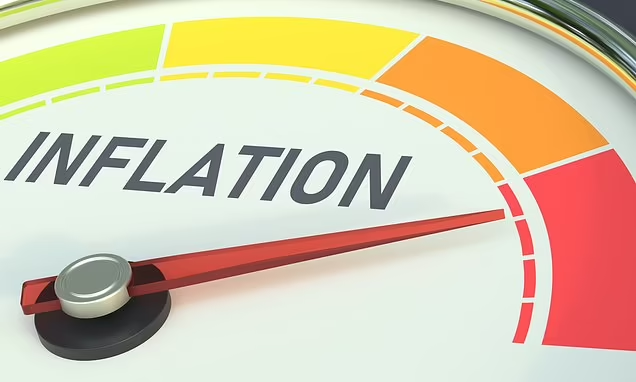
US inflation stands at 3.4% as of August 2026, and gas prices jumped 3% in a single week to $4.44/gallon. Here's what's driving it and practical steps to protect your budget.
The latest numbers show inflation running at 3.4% for the 12 months ending in August 2026, according to Labor Department data released September 11 (US Inflation Calculator). Gas prices have been climbing even faster in recent weeks — the national average rose from $4.30 a gallon on September 10 to $4.44 a gallon on September 17, a roughly 3% jump in just one week (Finder). Prices vary sharply by state: California sits at $5.87 a gallon, among the highest in the country, while Indiana is the cheapest at $3.42.
Gas prices have been unusually volatile throughout 2026, tracking the US-Iran conflict over the Strait of Hormuz, which has repeatedly disrupted oil markets and pushed crude prices sharply higher at multiple points during the year (CNBC). That volatility feeds directly into what drivers pay at the pump, and it ripples further into the broader cost of goods and services, since transportation costs are baked into nearly everything that gets shipped.
With wages not consistently outpacing inflation, many households are feeling squeezed by rising costs across gas, groceries, and everyday expenses. The situation is hardest on households with fixed incomes or limited financial cushion, making it worth taking a fresh look at your budget now rather than waiting for prices to stabilize on their own.
With top high-yield savings accounts still paying meaningfully more than the national average, parking your emergency fund and short-term savings in a competitive account is a low-effort way to offset some of inflation's bite. Beyond that, keeping up regular contributions to a 401(k) or IRA, using cashback or rewards credit cards for planned purchases you pay off in full each month, and resisting lifestyle inflation as income grows are all ways to keep inflation from eroding your longer-term financial position.
What's the current US inflation rate? 3.4% for the 12 months ending August 2026, based on the most recent Labor Department CPI data. The next reading, covering September, is due October 14, 2026.
What's the national average gas price right now? $4.44 a gallon as of September 17, 2026, up from $4.30 a week earlier — a fast-moving jump tied to ongoing oil market volatility.
Why are gas prices so volatile in 2026? The ongoing US-Iran conflict over the Strait of Hormuz has repeatedly disrupted global oil supply, pushing crude prices sharply higher at multiple points during the year and feeding directly into pump prices.
Which states have the highest and lowest gas prices? California is among the highest at $5.87 a gallon, followed by Washington and Hawaii; Indiana is the lowest at $3.42, followed by Texas and Oklahoma.
What's the best way to protect my budget from rising gas and grocery costs? Batch errands and consider carpooling to cut gas usage, plan grocery trips around a list to avoid impulse spending, and rebuild your budget to reflect current prices rather than last year's numbers.
Should I still be saving with inflation this high? Yes — inflation erodes cash sitting idle, but a solid emergency fund and consistent retirement contributions remain essential. Using a high-yield savings account for short-term savings helps offset some of inflation's impact.