
Middle East & Gulf
Saudi Arabia's NEOM Financing Reset in 2026: How a $32 Billion Deal Fits Into a Broader Vision 2030 Scale-Back
Sep 18, 202613 min read
By WorldFinance Editorial Team
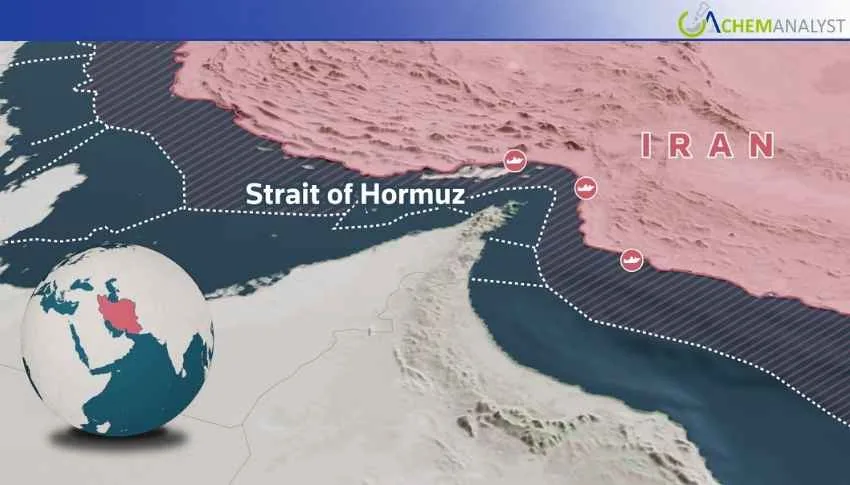
Since February 2026, traffic through the Strait of Hormuz has collapsed by roughly 95%, cycling through closures, brief reopenings, and renewed attacks — here's the real timeline.
The Strait of Hormuz carries roughly 20% of the world's oil — normally 120 to 140 vessels a day, about half of them tankers moving some 20 million barrels of crude. Since February 2026, that traffic has largely stopped, in a crisis the International Energy Agency has called the largest supply disruption in the history of the global oil market. Here's how it actually happened, step by step.
Iran shut the Strait of Hormuz to normal commercial traffic on February 28, 2026, after US and Israeli forces struck Iran that same day — within 48 hours, the world's most critical oil chokepoint had effectively closed (Wikipedia: 2026 Strait of Hormuz campaign). This wasn't a single declared blockade so much as a rapid collapse in commercial shipping as tankers and their insurers concluded the strait had become too dangerous to transit.
The crisis escalated through the spring. On April 23, President Trump ordered the US Navy to destroy any Iranian boats caught laying mines in the strait, with targets expanding to include Iranian air defense sites, radar systems, mine-laying capabilities, communications infrastructure, and anti-ship missile and drone launchers. An early-April ceasefire briefly calmed the situation, and a memorandum of understanding reached in mid-June reopened the strait toll-free starting around June 17 — though traffic stayed well below pre-war levels even then.
That calm didn't last. The June agreement broke down in early July after attacks on commercial vessels, and the strait has been effectively closed to routine commercial shipping again since.
At the worst point of the crisis, daily tanker traffic through the strait collapsed to as few as two vessels a day — down roughly 95% from the 120-140 vessels that transited before the war (Gulf News). As of September 18, 2026, the strait remains effectively closed to normal commercial shipping: just 8 ships transited on September 13, compared with roughly 85 a day in more typical periods this year (Hormuz Strait Monitor). A September 11 attack that knocked out Saudi Arabia's East-West Crude Oil Pipeline added further disruption, contributing to what regional trade data shows as roughly 39% of global trade and 31% of global shipments affected by the broader conflict.
One of the clearest signs of how dangerous the strait has become isn't a price chart — it's the cost of insuring a ship to sail through it. War-risk insurance premiums have surged from roughly 0.25% of a vessel's hull value before the war to between 3% and 10% now (The National). For a $100 million tanker, that's the difference between a roughly $250,000 premium and one costing $3 million to $10 million — a jump steep enough on its own to keep many commercial operators from attempting the transit even when the strait is technically passable.
The pattern so far — closure, partial reopening under a negotiated agreement, then renewed closure after fresh attacks — suggests the strait's status will likely keep oscillating rather than resolving cleanly in either direction. Each reopening has come with reduced traffic even when nominally in effect, reflecting how deeply the insurance and safety calculus has shifted for shipping operators. For anyone tracking oil markets or global trade, the real signal to watch isn't just whether the strait is formally "open" or "closed," but the actual vessel-transit counts and war-risk insurance rates, which tell a more accurate story of how much oil and trade is really moving through the chokepoint at any given time.
When did the Strait of Hormuz first shut down in 2026? On February 28, 2026, following US and Israeli strikes on Iran that same day — commercial traffic effectively collapsed within 48 hours.
Was the strait ever reopened? Yes, briefly. A mid-June 2026 memorandum of understanding reopened it toll-free from around June 17, though traffic stayed well below normal even then, and the agreement broke down in early July after attacks on commercial vessels.
How much has shipping traffic actually dropped? Traffic collapsed by roughly 95% at the worst point, down to as few as two tankers a day from a pre-war norm of 120-140 vessels daily. As of mid-September 2026, only about 8 ships were transiting daily versus a typical 85.
How has this affected shipping insurance costs? War-risk insurance premiums have jumped from about 0.25% of a vessel's hull value to 3-10%, meaning a $100 million tanker's premium rose from roughly $250,000 to $3-10 million.
What role did mining play in the crisis? In April 2026, Trump ordered the US Navy to destroy Iranian boats caught laying mines in the strait, part of a broader military campaign targeting Iranian air defense, radar, and missile capabilities threatening the waterway.
Is the Strait of Hormuz crisis resolved? No. As of September 2026, it remains effectively closed to normal commercial shipping, following a pattern of closure, partial reopening, and renewed closure that has repeated multiple times since February.